
Rabbit behavior feels confusing when biting, thumping, and chewing start fast.
This rabbit behavior training guide helps you read signals first. Then you can train with less stress and more trust. I learned this the hard way with shy rabbits who looked “stubborn” until their space felt safe.
Picture this situation. Your rabbit thumps, runs under the sofa, then chews the skirting board ten minutes later. That is not one problem. It is fear, energy, and unmet chewing needs showing up together.
You will learn rabbit body language, daily habits, litter box work, safe handling, and when behavior means illness. You will also learn how to train a rabbit without scaring them.
Rabbit Behavior Basics: How Rabbits Think
Rabbit behavior makes more sense when you remember one fact. Rabbits are prey animals. Their body and brain are built to spot danger fast. According to the RSPCA, rabbits need safe housing, hiding places, exercise, and social contact to stay well.
Imagine your rabbit freezing when your child walks past. I used to think that meant calm. It often means the rabbit is checking risk. And when you answer that signal gently, training gets easier.
Prey-animal instincts and safety
A rabbit wants safe exits before it wants lessons. That is why cornering causes panic. Their heart rate rises, muscles tense, and the next move can be a bolt, nip, or thump.
But safety is not just a soft bed. It means a hide box, steady routines, and no surprise grabbing. Because your rabbit learns from patterns, calm repeats matter more than long talks.
I start training on the floor. I let the rabbit come close first. Then I reward small choices, like sniffing my hand or staying relaxed nearby.
Wild behavior in domestic rabbits
Domestic rabbits still carry wild rabbit habits. They dig, chew, mark, scan, and hide. These actions are not flaws. They are normal needs showing up in your home.
And this is where many homes go wrong. A rabbit with no digging box may dig carpet. A rabbit with no chew choices may chew chair legs. The behavior is normal, but the target is unsafe.
Give legal outlets before you ask for control. Use cardboard, hay mats, tunnels, and safe chew toys. Then, the training has something fair to build on.
Why punishment fails with rabbits
Punishment teaches rabbits that people are unsafe. Yelling, tapping the nose, or chasing can break trust fast. It may stop one action once. But it often adds fear.
Because rabbits connect your body with danger, they remember rough handling. A rabbit that was grabbed from a litter box may avoid the box later. That looks like poor training, but it began with fear.
Better training rewards the choice you want. Mark the right action, give a treat, then repeat. Small wins stack faster than fear ever does.
Rabbit Body Language Dictionary
Rabbit body language is your first training tool. It tells you if your rabbit feels safe, tense, social, or sick. I do not ask for a new behavior until I read the body first.
Picture this situation. Your rabbit sits still near the door with ears stiff and eyes wide. You may think they are ignoring you. But their body says, “I am checking danger.”
Use this decoder before you train, touch, or move your rabbit. It turns signals into clear action.
← Scroll to see more →
| Behavior | Likely meaning | Owner response | Vet concern? |
|---|---|---|---|
| Binky | Joy or high energy | Give safe space to run | No |
| Flop | Deep rest and trust | Stay calm | No |
| Zoomies | Play or stored energy | Add run time | No |
| Upright ears and freeze | Alert or unsure | Pause and lower noise | No, unless constant |
| Thumping | Alarm, anger, or warning | Check the cause | If illness signs appear |
| Chinning | Scent marking | Leave safe marked items | No |
| Hunched posture | Pain or gut trouble | Check food and poop | Yes |
| Loud tooth grinding | Pain | Call a rabbit vet | Yes |
| Hiding all day | Fear, pain, or stress | Check food and room | Yes, if sudden |
| Screaming | Extreme fear or pain | Get urgent care | Yes |
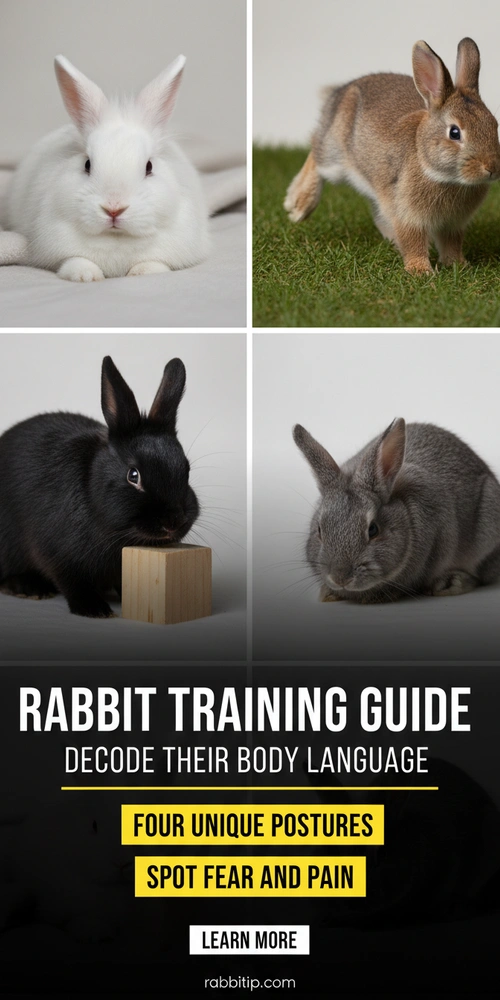
For a deeper visual guide, see these rabbit body language signs. Keep reading here for the training response that should follow each signal.
Happy signs: binkies, flops, zoomies, relaxed ears
A binky is a jump with a twist. It often means joy or playful energy. Zoomies are fast runs, often around a room or pen. Relaxed ears sit softly, not pinned tight.
But happy does not always mean ready to be held. A rabbit may binky, then dodge your hands. That is normal. Joy and touch comfort are different skills.
I reward happy confidence with space. And I keep feet, wires, and slick floors safe. A happy rabbit moving fast can still get hurt on poor flooring.
Affection signs: licking, nudging, loafing nearby
Licking can mean social grooming. Nudging may ask for pets, space, or food. A loaf near you often means trust. The feet tuck under the body like a soft bread roll.
Because rabbits show love quietly, new owners miss it. A rabbit sitting three feet away may be choosing you. That counts.
I return affection with gentle forehead strokes. I stop after a few seconds. Then the rabbit can ask for more instead of feeling trapped.
Alert signs: upright ears, freezing, scanning
Upright ears, still posture, and wide eyes mean your rabbit is checking something. Scanning means the head shifts as they map sounds or movement. This can happen after a door slam or a new smell.
And this is not the time to train. Pause, soften your body, and lower noise. Let your rabbit decide the room is safe again.
Once the body loosens, offer a treat near you. Do not push it under their nose. Let them come forward.
Fear and unhappy rabbit body language
Unhappy rabbit body language often looks like hiding, freezing, lunging, or pressing flat to the floor. Ears may pin back. The eyes may look wide. The body may tense before a run.
Picture this situation. Your rabbit hides each time you walk in with shoes on. That may mean the foot sound predicts chase or handling. Change the pattern before you ask for trust.
But do not label fear as an attitude. Fear is information. Give a hide, sit sideways, and toss one treat away from you. That tells the rabbit they can retreat and still be safe.
Pain signs: loud tooth grinding, hunched posture, hiding
Pain signs can look quiet. A rabbit may sit hunched with its belly tucked. Loud tooth grinding is different from soft tooth purring. Loud grinding often signals pain.
According to the Merck Veterinary Manual, rabbits can show illness through appetite loss, low stool output, tooth grinding, or reduced movement. These signs need fast action because rabbits hide sickness well.
Because pain can mimic fear, watch the full pattern. Is your rabbit eating hay, drinking, and pooping? If not, call a rabbit-savvy vet.
Common Rabbit Behaviors and What They Mean
Common rabbit behavior becomes less scary when you sort it by purpose. Some actions warn. Some mark. Some ask for space. Some mean hormones are driving the bus.
Imagine your rabbit circling your feet while honking. It can feel cute and odd. But that small sound often links to mating behavior, excitement, or food.
Thumping, stomping, and alarm behavior
Thumping is a loud back-foot stomp. Rabbits use it as an alarm, protest, or warning. The trigger may be a sound, smell, pet, or person.
And yes, it can happen at night. Rabbits hear things you miss. If you wonder why bunnies thump, look for patterns before you correct it.
Check the room first. Then reduce the trigger if you can. Do not punish the thump.
Chinning, spraying, droppings, and territory
Chinning means your rabbit rubs scent glands on objects. Those glands sit under the chin. It tells the room, “Mine.” Droppings can also mark space.
Spraying is urine marking. It is common in unfixed rabbits. But it can also rise during stress, bonding, or new smells.
Because scent makes rabbits feel secure, clean with care. Remove urine from the wrong spots. Leave safe marked toys alone when you can.
Circling, honking, and hormonal behavior
Circling your feet often means excitement. Honking is a soft buzzing or grunting sound. Together, they can mean courtship or food joy.
But hormonal behavior can turn pushy. Mounting, spraying, and chasing may rise. A vet can discuss spay or neuter timing based on age and health.
I do not punish circling. I redirect with a cue, treat scatter, or short game. The goal is safer energy, not shame.
Nipping, biting, boxing, and lunging
Nipping can mean “move,” “stop,” or “notice me.” Biting is harder and may break skin. Boxing means the front paws strike forward. Lunging means the rabbit charges to warn you away.
Picture this situation. Your rabbit lunges when you reach into the pen. That space may feel like their safe den. Reach less, trade more.
And protect your hands. Use a dustpan for cleaning near a tense rabbit. Toss treats outside the pen, then clean once they move. That keeps trust intact.
Screaming and emergency behavior
A rabbit scream is rare and serious. It can mean extreme fear, severe pain, or a life-threatening event. Treat it as urgent.
Because rabbits do not scream for small complaints, act fast. Move them only as needed for safety. Keep the room quiet and call a rabbit-savvy vet.
Do not wait to see if it happens again. One scream is enough. That sound belongs in the emergency category.
Abnormal Rabbit Behaviour: When to Call a Vet
Abnormal rabbit behaviour means a clear change from your rabbit’s normal pattern. It may be sudden hiding, appetite loss, odd posture, or less movement. I treat behavior changes as health clues first.
Imagine your rabbit skipping breakfast after eating well for months. That is not a picky mood until proven safe. Rabbits need steady gut movement.
Sudden behavior changes
Sudden changes matter because rabbits hide pain. A friendly rabbit may become still or snappy. A tidy rabbit may miss the litter box. A playful rabbit may sit facing a wall.
But context matters once. A new vacuum or visitor can upset a rabbit. If the change stays, grows, or pairs with low appetite, call your vet.
Track the start time. Note food, poop, posture, and movement. Those details help the clinic triage faster.
Eating, pooping, and GI stasis warnings
GI stasis means the gut slows or stops moving. It can become life-threatening. Warning signs include fewer droppings, no appetite, hunched posture, and low energy.
According to the Merck Veterinary Manual, reduced appetite and stool output can signal serious rabbit illness. Learn the GI stasis warning signs before you need them.
Because rabbits need fiber moving through the gut, hay intake matters daily. If eating or pooping drops, seek vet help fast. Do not try random home cures first.
Respiratory, eye, head tilt, and pain clues
Noisy breathing, wet nose, runny eyes, head tilt, drooling, and grinding can point to illness. Head tilt may involve the ear, brain, or balance system. Drooling can be linked to dental pain.
And pain can change behavior before you see injury. A rabbit may bite when lifted because the back, belly, or mouth hurts. That bite is data.
Use one professional consultation for health doubts. A rabbit-savvy vet can check teeth, gut, lungs, ears, and pain signs.
What to track before calling
Write down the exact change and time. Count droppings if you can. Note food eaten, water used, posture, breathing, and any loud grinding.
But do not delay care to make a perfect list. Bring what you have. Clear notes help, but quick help matters more.
Rabbit Training Principles That Actually Work
Training works best when your rabbit feels safe and gets paid well. I use tiny rewards, short sessions, and clean timing. That makes learning feel like a choice.
Picture this situation. Your rabbit steps onto a mat, hears a marker, and gets a herb leaf. Soon the mat becomes a happy place. And that small skill can help with handling later.
Positive reinforcement basics
Positive reinforcement means you add something your rabbit likes after a behavior. The behavior then becomes more likely. Food rewards work well because timing stays clear.
According to the House Rabbit Society, reward-based methods such as clicker work can teach rabbits without force. The marker tells the rabbit which action earned the treat.
Start with simple wins. Reward looking at you, touching a target, or stepping into a carrier. Keep the first sessions almost too easy.
Treats, timing, and short sessions
Use tiny treats. Good options include a pea-sized herb piece or a small bit of pellet. Too many sweet treats can upset the gut.
And timing matters more than treat size. Mark the behavior within one second. Then feed. Late rewards can teach the wrong action.
I keep sessions near two to five minutes. Stop before your rabbit leaves. A short good session beats a long messy one.
Clicker training for rabbits
Clicker training for rabbits uses a small sound to mark the right moment. Click, then treat. Repeat until the sound means a reward is coming.
A clicker is useful because it stays the same each time. Your voice can change with mood. The click stays clean. For a full setup guide, use this clicker training for rabbits resource.
But do not click near a scared rabbit’s ear. Start softly or use a quiet word like “yes.” The marker should help, not startle.
Luring, cues, and hand signals
Luring means guiding your rabbit with food. You might move a herb leaf toward a mat. When the rabbit follows, mark and reward.
After a few tries, fade the lure. Use the hand motion without food in your fingers. Then reward from the other hand or a nearby cup.
Because rabbits read body movement well, hand signals help. Keep each cue simple. One cue should mean one action.
What not to do: yelling, chasing, forced handling
Do not yell, chase, pin, scruff, or force lessons. These actions make training slower and risk injury. Rabbits have delicate backs.
But you can set firm limits. Block unsafe areas, remove cords, and use pens. Management is kinder than panic correction.
How to Train a Rabbit to Use a Litter Box
Rabbit litter training works when the setup matches rabbit instincts. Rabbits like to eat hay and poop in one area. Use that habit, and training feels much easier.
Imagine your rabbit leaving droppings beside the box. The rabbit may be close, not defiant. A small setup change can fix more than a scolding ever could.
Setup: box, hay placement, safe litter
Choose a low-entry cat litter box for most rabbits. It should fit the rabbit with room to turn. Add paper-based litter or aspen pellets. Avoid clumping clay and strong scents.
Place hay at one end of the box. Rabbits often poop while eating. That habit is your friend.
According to House Rabbit Society, litter training improves when hay sits near or inside the box area. For a fuller checklist, follow these rabbit litter training steps.
Step-by-step litter training routine
Start in a smaller safe space. Put the litter box in the corner your rabbit chooses. Add hay to the box. Place stray droppings into it.
- Set one large litter box in the chosen corner.
- Add safe litter and a hay pile.
- Move droppings into the box several times daily.
- Clean urine spots with rabbit-safe cleaner.
- Reward your rabbit for using the box.
- Expand space only after habits look steady.
And keep the routine boring in the best way. Same box, same corner, same reward. Rabbits learn patterns.
If accidents rise after more space, shrink the area again. That is not failure. It is clearer teaching.
Fixing accidents and territory marking
Accidents often mean the box is too small, too dirty, or in the wrong place. Some rabbits dislike covered boxes. Others need a second box near a favorite room.
But scattered dry droppings can be marking. New rooms, new pets, or fresh laundry smells may trigger it. Clean the mess, then reduce the space for a few days.
Do not scrub every safe scent mark away. If the whole room smells new daily, your rabbit may mark more. Keep some familiar bedding.
Spay/neuter and litter habits
Spaying or neutering often improves litter habits. It can reduce spraying, marking, and hormone-driven mess. Timing depends on age, sex, and health.
Because surgery decisions need vet advice, ask a rabbit-savvy clinic. They can explain risks and benefits. Training still matters after healing.
A fixed rabbit may still miss sometimes. Use setup and routine first. Then adjust space and box placement.
Training Everyday Skills and Handling
Every day, skills keep your rabbit safer. Recall, carrier entry, target touch, and gentle handling all help at home. I teach these before I need them.
Picture this situation. The smoke alarm chirps, and your rabbit knows “carrier.” That calm skill matters more than a cute trick. And it starts with tiny practice.
Come when called
Say your rabbit’s name once. Then make a soft sound and offer a tiny treat. Reward any step toward you at first.
But do not call for things your rabbit hates. If “come” predicts nail trims, it will fade fast. Use the cue for good things many times.
Practice from one foot away. Then add distance. Keep sessions short and happy.
Go home or enter the carrier
Leave the carrier out as furniture. Add hay or a mat inside. Reward looking at it, then stepping near, then entering.
Because forced loading teaches fear, use choice early. Toss a treat inside and wait. Close the door for one second only after comfort grows.
Build slowly before travel day. The carrier should smell normal. A panic box helps nobody.
Target training
Target training teaches your rabbit to touch an object with their nose. A small ball on a stick works. So does a safe lid.
Mark the nose touch and treat. Then move the target a few inches. Soon you can guide your rabbit without grabbing.
And this skill solves many small problems. Use it to move away from cords, enter a pen, or step onto a mat.
Nail-trim handling and gentle touch
Teach touch before nail trims. Stroke the forehead, mark calm, and treat. Then touch a shoulder, paw area, or back for one second.
But do not rush feet. Many rabbits hate paw handling. Pair each tiny touch with food, then stop.
A helper can feed during trims. Use good light and proper clippers. If you are unsure, ask your vet team to show you once.
Training multiple rabbits
Train bonded rabbits together and apart. Some rabbits learn by watching. Others steal treats and cause chaos. Very rabbit, honestly.
Because jealousy can start fast, feed each rabbit fairly. Use stations, mats, or separate sides of a pen. Reward calm waiting.
Do not split bonded rabbits for long. Keep practice brief. End before tension rises.
Fixing Problem Behaviors Without Punishment
Problem behaviors often mean your rabbit has a need without a safe outlet. Chewing, digging, biting, and hiding all carry messages. I fix the setup before I blame the rabbit.
Imagine your rabbit chewing the sofa at 9 p.m. each night. That may be peak energy, boredom, or a texture they love. The fix needs timing, barriers, and better chew choices.
This matrix helps match the problem to a fair response.
← Scroll to see more →
| Problem | Common cause | Training fix | Environment fix | When to seek help |
|---|---|---|---|---|
| Chewing cords | Normal chewing and access | Reward leaving cords | Block cords fully | If sudden and frantic |
| Biting hands | Fear, pain, or guarding | Trade and reward distance | Stop reaching into the den | If bites start suddenly |
| Carpet digging | Boredom or nesting drive | Cue to a dig box | Add cardboard and mats | If stress signs appear |
| Cage lunging | Space fear | Toss treats and step back | Use side doors and more space | If pain signs appear |
| Hiding all day | Fear or illness | Reward small steps out | Add hides and quiet time | If appetite drops |
Stop bunnies from eating everything
To stop bunnies from eating everything, block danger first. Cords, toxic plants, carpet glue, and painted wood are not training items. They need barriers.
Then offer better chewing. Willow, apple sticks, hay mats, and plain cardboard can help. See safe bunny chew toys for safer choices.
And use the replacement rule. Block the sofa leg, place a chew beside it, and reward the better choice. This guide on how to stop bunnies from eating everything can help with tougher homes.
Biting and cage aggression
Cage aggression often starts when hands invade a rabbit’s safe space. The rabbit learns that lunging makes the hands leave. That lesson works, so it repeats.
But you can change the pattern. Stop reaching over the rabbit. Open the pen, toss a treat out, and clean once they exit.
If biting starts suddenly, check for pain. Teeth, gut pain, sore feet, or arthritis can change tolerance. Behavior is not separate from the body.
Digging, carpet pulling, and boredom
Digging is normal. Carpet pulling is the indoor version nobody asked for. Give a dig box with shredded paper, hay, or safe soil if you can manage a mess.
Because boredom grows in quiet pens, add foraging. Scatter pellets in hay. Hide herbs in cardboard tubes. Rotate toys so old items feel new.
Reward digging in the box. Block the carpet corner. Do both every day until the habit shifts.
Fearful rabbits and trust rebuilding
Fearful rabbits need control. Sit low, turn sideways, and let them approach. Toss treats away from your body so retreat feels allowed.
And avoid picking them up for bonding. Most rabbits dislike being lifted. Floor time builds trust faster.
The 3-3-3 rule for rabbits is a useful adoption lens. The first 3 days are decompression. The first 3 weeks build a routine. The first 3 months reveal deeper comfort.
Using the 3-3-3 rule for rabbits
What is the 3 3 3 rule for rabbits? It is a simple way to place new-home trust. It is not a strict clock. It is a reminder to slow down.
Picture this situation. Your new rabbit hides for days, then explores only at night. That can be normal settling. Keep routines steady and ask for less.
Environment, Enrichment, and Social Needs
The environment shapes rabbit behavior every day. A cramped, dull, or loud space creates problems that training cannot fully fix. I always check the room before I change the lesson.
Imagine your rabbit chewing baseboards after a full day in a small pen. That is not a mystery. The body needs movement, chewing, digging, and choice.
Rabbit-proofing the home
Rabbit-proofing means removing danger before freedom. Cover cords, block gaps, lift plants, and protect baseboards. Use gates and pens before trust is complete.
But do not rely on watching alone. Rabbits move fast and chew quietly. A cord can be damaged in seconds.
Use this guide to rabbit-proofing your home before longer free-roam time. Good barriers reduce conflict.
Housing setup and safe space
A rabbit needs room to stretch, hop, hide, eat, and toilet. A tiny cage cannot meet those needs. Safe space helps behavior settle.
According to the RSPCA, rabbits need daily exercise and space for normal behavior. A good rabbit housing setup supports that from day one.
And every rabbit needs a no-touch hiding spot. Children and guests should respect it. Safety teaches social bravery.
Chew toys, foraging, and exercise
Chewing keeps teeth worn and minds busy. Foraging makes food last longer. Exercise burns stress before it becomes mischief.
Use hay racks, tunnels, willow balls, paper bags, and puzzle feeders. Keep items plain and safe. Avoid plastic toys that break into sharp bits.
Because rabbits like novelty, rotate items weekly. Do not replace everything at once. Familiar smells still matter.
Companionship and supervised pets
Many rabbits enjoy rabbit companionship. Bonding must be slow and safe. Rabbits can fight badly if rushed.
But other pets need careful rules. Dogs and cats can scare or harm rabbits even during play. Use barriers and supervision.
If you are unsure whether rabbits need a companion, consider your rabbit’s age, health, and nature. A calm bond can improve daily welfare.
Rabbit Language FAQs
Rabbit language questions often come from worry. I hear the same fear under them. “Does my rabbit like me?” “Did I upset them?” “Can we still build trust?”
Picture this situation. Your rabbit ignores your lap but sleeps near your chair. That may be affection in rabbit terms. Small signals count.
How do you say “I love you” in rabbit language?
You say “I love you” in rabbit language by acting safe and predictable. Sit low, offer gentle forehead strokes, and stop before your rabbit moves away. Let your rabbit choose contact.
A rabbit may answer with licking, soft tooth purring, loafing nearby, or relaxed flops. Quiet trust is still trust. Do not force cuddles to prove a bond.
What is popcorning in bunnies?
Popcorning in bunnies usually means joyful jumping. Rabbit owners more often call it a binky. The rabbit leaps, twists, or kicks out midair.
It often appears during play or free run time. Make sure the floor has grip and the area is safe. Happy speed still needs a safe space.
How do rabbits say “sorry”?
Rabbits do not say “sorry” like people. They may return, nudge, groom, or sit near you after tension drops. That means they feel safer again.
Do not expect guilt after a bite or mess. Ask what caused the action. Then change the setup or training plan.
Are rabbits nocturnal?
Rabbits are not truly nocturnal. They are crepuscular, which means most active at dawn and dusk. That is why evening zoomies are common.
Your rabbit may also wake at night to eat hay or use the litter box. Keep hay available at all times. Quiet night activity is normal.
Can older rabbits still learn?
Older rabbits can still learn. They may need slower sessions, softer floors, and smaller goals. Pain checks matter more with age.
Use rewards and clear routines. Keep lessons short. A senior rabbit can learn litter habits, recall, and carrier comfort.
Conclusion: Build Trust One Small Routine at a Time
A rabbit behavior training guide works best when you read body language first, then train with patience and rewards.
Choose one routine today, such as litter box practice, recall, handling, or a chewing fix, then use rabbit body language signs, GI stasis warning signs, or clicker training for rabbits to guide the next small step.
