

A Dutch rabbit may look easy to keep. But it still needs good care.
This small breed has clear white marks. It is often calm and neat. It can suit new owners who plan well.
Rabbits are not cage pets. They need hay, space, kind touch, and vet care.
This guide covers facts, care, health, cost, and adoption. It will help you choose with care. For a broad start, use this complete pet rabbit guide.
What Is a Dutch Rabbit?
A Dutch rabbit is a small pet rabbit. It has bold white and colored marks. The ARBA breed standard values clean marks. It also values good color and a small, firm body.
Think of a rescue visit. You see three rabbits. The Dutch rabbit is easy to spot. Its face, blaze, and body band look painted on.
Here is a quick breed view.
← Scroll to see more →
| Trait | Typical Dutch rabbit details |
|---|---|
| Size | Small to medium |
| Weight | About 3.5 to 5.5 pounds |
| Lifespan | About 6 to 10 years |
| Temperament | Calm, social, alert |
| Care level | Good for new owners with daily care |
| Best for | Calm homes, adults, older children |
Size, markings, and breed identity
Dutch rabbit size is good for indoor homes. Most weigh less than many house cats.
Dutch rabbit colors include black, blue, brown, gray, steel, and tortoise. The white blaze, collar, feet, and saddle give this breed its look. You can compare them with other pet rabbit breeds if size matters at home.
Where the breed came from
The breed did not start in the Netherlands in a simple way. It came from rabbits traded through Europe. Then British breeders shaped the modern type.
Dutch rabbit traits often fit pet life. Many are calm with kind care. But each rabbit is still itself. Its comfort matters more than its breed.
Are Dutch Rabbits Good Pets?
Dutch rabbits can be good pets. They fit best in patients’ homes. They are often alert, tidy, and social.
The House Rabbit Society says rabbits need daily play time. They also need safe homes and gentle social time. Picture your rabbit hopping to you for greens. Then it hops away when it wants space.
Temperament and handling
Dutch Rabbit temperament is often calm and curious. Many like being near people. They feel safer with all four feet on the floor.
Most rabbits do not like being held. Their backs and legs can get hurt fast. Sit on the floor. Let your rabbit come to you first. Patience works better than grabbing.
Best homes for a Dutch rabbit
A Dutch rabbit needs daily time. Plan for food, clean-up, play, and quiet care.
They can fit homes with older kids. Kids must follow rules. Small kids need adult help. Loud chasing can break trust fast. A calm room and soft voice help most.
Dutch Rabbit Care Basics
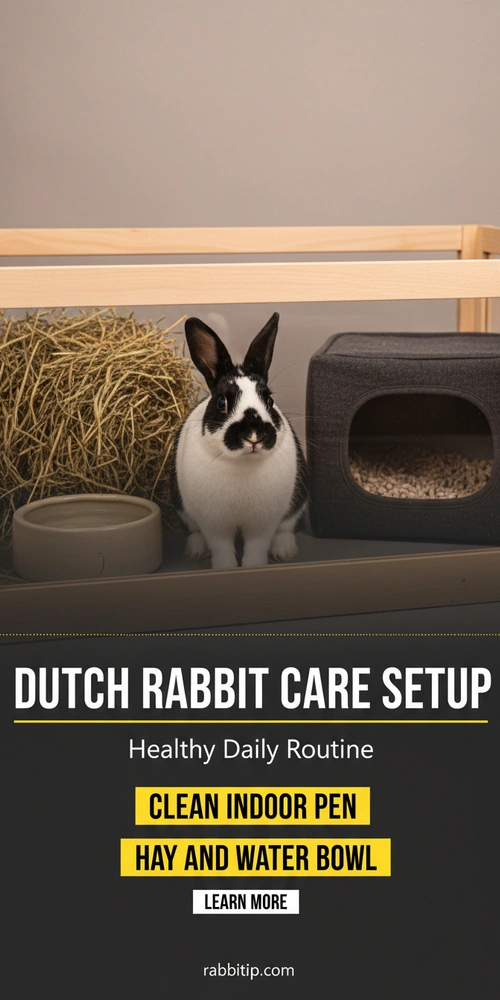
Dutch Rabbit care starts with space, hay, water, and play. Set up a clean pen. Put hay in one spot. Keep water close. Add a hideout for rest.
Housing and space
A hutch alone is not enough. Your rabbit needs room to stretch and hop. It must turn and stand with ease.
Use a large pen if you can. A safe room can also work. Cover wires. Block small gaps. Remove toxic plants. Add one hideout. Rabbits need a safe place.
Hay-first diet and water
Hay should be the main food each day. It helps wear teeth down. It also keeps the gut moving.
The House Rabbit Society says grass hay should make up most of the diet. Add small amounts of pellets and leafy greens. Keep fresh water near your rabbit. A heavy bowl works well.
Exercise, litter box, and enrichment
A Dutch rabbit needs hours outside its pen each day. Play helps the body, mood, and gut.
Many rabbits learn to use a litter box. Put hay near the box. Rabbits often eat and poop in one place. Still, expect a few stray droppings.
Health and LifespanThe
Dutch rabbit’s lifespan is often 6 to 10 years. Some live longer with good care. Plan for a long pet life.
Watch small changes. Your rabbit may eat less one night. It may sit hunched in a corner. That can be a real warning sign.
Average lifespan
The average Dutch rabbit lifespan depends on food, home, genes, and vet care. Indoor rabbits often live longer than outdoor rabbits.
A long life needs planning. You need food money, a safe space, and travel help.
Common health problems
Dutch rabbits can get tooth disease. They can also get GI stasis, colds, and pests. GI stasis means the gut slows or stops.
VCA Animal Hospitals says rabbits hide sickness well. They need fast care when food or poop changes. Watch for no eating, fewer poops, drool, head tilt, runny eyes, sneezing, or tooth grinding. These signs need a rabbit vet.
Prevention and vet care
Good care starts with hay and a clean home. Add play time and weight checks.
Check teeth, nails, eyes, ears, and poop each week. Home checks help. But they do not replace a vet. Book one vet visit after adoption. Then follow your vet’s plan for exams and shots.
Cost and Adoption Considerations
Dutch rabbits can be cheap to adopt. They are not free to keep.
Picture the first weekend. You pay a small adoption fee. Then you buy a pen, a box, a hay rack, a carrier, nail clips, and a vet visit.
Upfront costs
How much do Dutch rabbits cost? Adoption often costs about $30 to $100. Breeders may charge about $50 to $150 or more.
Start-up gear can cost more than the rabbit. Use this pet rabbit cost guide before you shop. A safe pen and vet visit matter more than cute extras.
Ongoing monthly costs
Monthly costs often run about $40 to $100. Hay, greens, pellets, litter, and toys add up.
Here is a simple budget view.
← Scroll to see more →
| Cost type | Typical range |
|---|---|
| Startup setup | $150 to $400 |
| Monthly food and litter | $40 to $100 |
| Routine vet care | $75 to $200 per visit |
| Emergency care | Often $200 or more |
Rescues may include health checks. Some also share spay or neuter details. This can lower the risk. Before you buy, learn how to adopt a bunny rabbit from a rescue or shelter.
FAQ
Are they easy to train?
Dutch rabbits can learn litter habits. They can also learn simple routines. Use rabbit-safe litter. Place hay beside the box. Reward calm acts with greens or praise.
Are they cuddly?
Dutch rabbits can be sweet. But many do not like being picked up. They may prefer pets on the floor beside you. Trust grows with quiet daily time.
Are they meat rabbits?
Dutch rabbits are not common meat rabbits today. Most are pets or show rabbits. Their small size makes larger breeds more common for meat.
Choose a Dutch Rabbit With Care
A Dutch rabbit can be a good pet. Your home must meet its needs. It needs space, hay, social time, and vet care.
Review the care list. Compare adoption choices. Use breed and cost guides before you choose.
