
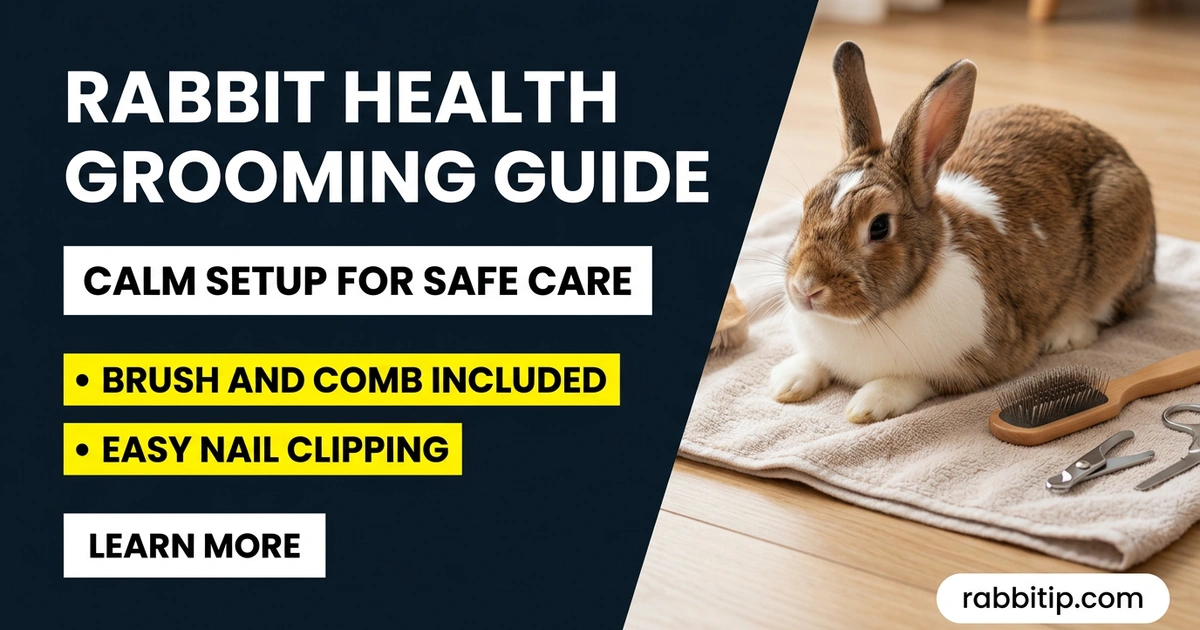
Poor care can hide pain. It can hide dirt too. It can also hide early signs of illness. This rabbit health grooming guide shows safe home checks. It does not use rough holds or risky baths.
This guide is for caring owners. You want to help. You also fear hurting your rabbit. Your rabbit may sit on a towel. It may breathe fast. You may hold a brush and feel unsure.
You will learn what to check. This includes food, poop, teeth, skin, feet, ears, and the bottom. You will also learn when to stop home care.
Use this guide for a calm care plan. It covers brushing, nails, checks, bath safety, and vet signs.
Why Grooming Is Part of Rabbit Health Care
Grooming is not just for a neat coat. It is a health check. You can do it each week. Your rabbit may look fine far away. But fur can hide dry skin, sore feet, or a wet chin.
Keep each session short. Stress can make the next one harder. A few calm minutes can show a change early. Rabbits hide pain very well.
Loose fur, gut risk, and daily comfort
Rabbits lick loose fur when they clean. They cannot throw it up. Too much fur may add gut risk. This is worse when the gut slows.
Food and hay help too. Fiber helps the gut move. Start with the best food for rabbits if you need a food check.
Handling sessions as health inspections
A grooming hold lets you check more than fur. Look at eyes, ears, nails, feet, skin, and bottom.
Keep your hands soft. Do not ignore a new lump. Do not ignore a cut or bad smell. Small signs can get worse fast.
Rabbit Grooming Schedule: Daily, Weekly, and Seasonal Tasks
A plan keeps care simple. It also stops long, hard sessions. According to rabbit.org, coat care needs steady work. Long-haired rabbits need more care.
Your rabbit may eat less at breakfast. It may leave fewer poops. That small change matters. It can matter more than a shiny coat.
Daily quick checks: appetite, droppings, coat, bottom
Check food, water, poop, and mood each day. Look at the coat and the bottom too.
Keep this check fast. Look again if the fur is wet. Look again for stuck poop or hiding. These signs can mean pain or gut trouble.
Weekly grooming: brushing, nails, ears, eyes, feet
Weekly care should include soft brushing. It should also include a full body check. Check nails, ears, eyes, and foot fur.
Use this table as a simple care map.
← Scroll to see more →
| Task | How often | What to check | Call a vet if |
|---|---|---|---|
| Food and poop | Daily | Eating, poop size, poop count | No food or no poop |
| Brushing | Weekly | Loose fur, mats, dry skin | Bald spots, cuts, bugs |
| Nails | Every 3 to 6 weeks | Length, curl, breaks | Bleeding, pain, long curl |
| Eyes and ears | Weekly | Clear eyes, clean ears | Redness, smell, head tilt |
| Bottom check | Daily to weekly | Clean, dry fur | Wet fur, loose stool, flies |
Heavy shedding and long-haired rabbit adjustments
Shedding rabbits need more brushing. Long-haired rabbits may need daily combing.
Do not wait for tight mats. Do not cut mats close to skin. Rabbit skin can tear very fast.
Rabbit Grooming Kit: Safe Tools to Keep at Home
A small kit is best. You need safe basics. You do not need many sharp tools. A mat near the tail can happen fast. You need a comb, a towel, and light.
Keep tools in one place. This keeps sessions short. Replace dull nail clippers. Dull clippers can crush nails. Avoid strong smells and loud tools. Rabbits notice small changes.
Brushes, combs, towels, clippers, styptic powder
Use a soft brush for short coats. Add a small comb for loose fur.
Use a slicker brush with care. Its wires can scratch skin. A towel helps stop slips.
Keep rabbit nail clippers ready. Styptic powder can stop mild nail bleeds. Use a small light for dark nails.
Tools to avoid or use only with professional guidance
Avoid scissors near skin. Mats can hide thin skin folds. Clippers need skill and calm hands.
Skip wipes or soaps with scent. Use them only if your vet says yes. Do not use dog or cat flea meds. Some can harm rabbits.
How to Brush a Rabbit Safely
Learning how to groom a rabbit takes time. Brushing should feel short and calm. According to the Rabbit.org Foundation, brushing helps remove loose fur. This helps most during shed times.
Your rabbit may hop away after one minute. It may come back for food. That short session still helped.
Set up a calm, non-slip grooming area
Use the floor when you can. A towel gives grip. It also lowers fall risk.
Keep treats, brush, comb, and a bin close. Close the door too. Do not chase your rabbit. Chasing teaches fear.
Brush with the coat, check for mats, keep sessions short
Brush the way the coat grows. Use slow strokes on the back and sides. Do not tug the belly, tail, or legs.
If you find a mat, hold the fur base. Work the edge with a comb. Stop if the skin pulls.
Keep first sessions under five minutes. End before your rabbit panics. Trust grows when grooming stops on time.
Long-haired rabbits and heavy shedding tips
Long-haired rabbits need more combing. Angoras can mat fast. Check the chest, legs, and rear.
During heavy shed, brush each day if allowed. Give hay after grooming. Chewing helps the gut move.
What grooming behavior means: stress, trust, resistance
Rabbit grooming behavior can be hard to read. Thumps, freezing, nips, or fast breath mean stress.
Soft tooth purrs can mean comfort. For more signs, read rabbit behaviors and body language. Respect early pushback. Do not use a rough release.
Rabbit Nail Trimming Without Panic
Rabbit nail trimming helps feet and posture. Long nails change how a rabbit stands. Your rabbit may slip on smooth floors. Then it may avoid hopping. Long nails may play a part.
Trim small bits more often. This is safer than waiting months. Use bright light. Stop when your rabbit gets tense. One bad trim can hurt trust.
How to identify safe trimming length
Find the quick inside the nail. It holds blood. On pale nails, it looks pink. Cut a small bit before it.
Dark nails need more care. Shine a light behind the nail. You can also learn from how to trim rabbit nails.
What to do if the quick is clipped
A cut quickly bleeds and hurts. Press styptic powder on the nail tip. Hold firm for one minute.
Stay calm. Your rabbit feels your hands. Call your vet if bleeding does not stop.
When to use a vet or professional rabbit groomer
Get help for curled nails. Get help for black nails or fearful rabbits. A vet nurse can show safe angles.
Professional rabbit grooming can help with unsafe holds. Choose someone with rabbit skill. Dog and cat skills are not enough.
Eyes, Ears, Teeth, Feet, and Skin: Health Checks During Grooming
Grooming gives a close view. Rabbits hide many body parts. Check from nose to tail each week. Your rabbit may still eat pellets. But it may stop eating hay. The chin may look damp.
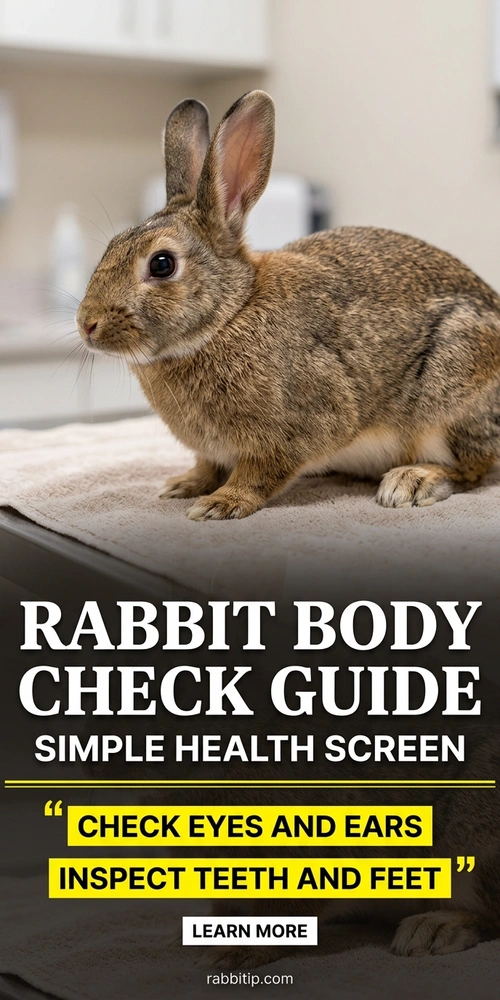
Use this table when you see a new sign.
← Scroll to see more →
| Body area | Normal | Warning sign | Next step |
|---|---|---|---|
| Eyes | Clear and open | Red, wet, swollen, squinting | Book a rabbit vet |
| Ears | Clean, light wax | Smell, crust, head shake | Ask vet before deep cleaning |
| Teeth | Dry chin, eats hay | Drool, wet chin, drops food | Book a tooth check |
| Feet | Fur on soles | Red skin, scabs, limp | Check floors and call vet |
| Skin | Smooth coat | Flakes, cuts, fleas, mites | Vet check and safe care |
Eye discharge, redness, and squinting
Rabbit eye care starts with clear eyes. Wet fur, redness, swelling, or squinting can mean pain.
Do not use human eye drops. Do not wait days for a closed eye. Read rabbit eye infection treatment for care signs.
Ear debris, mites, odor, and head shaking
Rabbit ear care means look, not dig. A little wax can be normal.
Crust, bad smell, head shake, or head tilt needs a vet. Ear mites can cause thick dirt and pain. Deep home cleaning can hurt the ear canal.
Teeth clues: drooling, wet chin, food changes
Rabbit teeth grow for life. Hay chewing helps wear them down.
Watch for drool, wet chin, or dropped food. A rabbit that stops eating hay needs care. Check the best hay for rabbits if the diet needs help.
Foot checks: sore hocks, overgrown nails, dirty fur
Feet should have fur on the soles. Red skin, scabs, or swelling can mean sore hocks.
Long nails add heel pressure. Dirty foot fur can mean urine trouble. Slippery floors can make this worse.
Skin and coat: flakes, bald patches, fleas, mites
Skin should look clean and calm. Flakes, bald spots, scabs, or bugs are not normal.
Mites can cause flakes and itch. Fleas also need rabbit-safe care. Ask a vet first. Unsafe products can poison rabbits.
Bottom Care, Scent Glands, and Matted Fur
A dirty bottom is not just messy. It can mean food trouble, pain, weight issues, or bladder disease. Your rabbit may smell bad. Fur under the tail may feel wet.
Check this area with care. Keep it quick. Do not flip your rabbit on its back. Take wet skin seriously. Urine scald can burn.
Why a dirty bottom is a health warning
A healthy rabbit keeps its bottom clean. Stuck poop, wet fur, or a strong smell needs a cause.
Soft cecotropes can stick after rich food. Pain can stop normal cleaning. Extra weight can make reaching hard.
Rabbit matted fur bottom: what owners can and cannot do
Rabbit matted fur bottom care has clear limits. You can use a damp cloth for a light mess. Dry the fur fully after.
Do not cut tight mats near skin. Rabbit skin is thin. It folds with ease. Use a vet or trained groomer for close mats.
Act fast if you see watery stool. True diarrhea is urgent in rabbits. Learn warning steps in rabbit diarrhoea treatment.
Scent gland cleaning: when to ask for help
Scent glands sit near the sex organs. They can hold dark wax.
Some rabbits need help with cleaning. Do not dig or scrape hard. Ask your vet to show you once.
Bathing Rules: Why Full Baths Are Usually Unsafe
Can you bathe a rabbit? Most rabbits should not get full baths. According to Best Friends Animal Society, brushing and spot-cleaning are safer. Soaking a rabbit is risky.
Your rabbit may have a dirty rear. The sink may seem easy. But baths can cause fear, chills, and injury.
Spot-cleaning instead of bathing
Clean only the dirty spot. Use a damp cloth. Use a shallow rinse if needed. Keep water off the full body.
Dry fur with towels right away. Keep the room warm. Do not use hot air near skin.
Incontinence, diarrhea, and when cleaning becomes urgent
Wet bottom fur needs quick cleaning. It also needs a cause. Urine can burn skin.
If you still wonder can you bathe a rabbit, start with spot-cleaning rules. Watery stool, weakness, or not eating needs urgent vet care.
Warning Signs That Need a Rabbit-Savvy Vet
Some signs are too risky for home care. Use this rule. Call if eating, breathing, balance, or pain changes. Your rabbit may sit hunched. It may refuse hay. It may leave no poop by noon.
Learn common signs of common rabbit diseases before a crisis. Save a clinic number. Do not wait for web fixes. Rabbits can get worse fast.
Not eating, tiny/no droppings, lethargy, pain, posture
Not eating is urgent in rabbits. Tiny poop or no poop also matters.
A hunched body can mean pain. Tooth grinding or hiding can mean pain too. These signs can point to bunny GI stasis. Fast care is needed.
Breathing, eye, ear, skin, and diarrhea red flags
Open-mouth breathing is an emergency. Blue color, collapse, or great weakness is too.
Bad eye swelling needs care. So do head tilt, bleeding cuts, and heavy diarrhea. For breath signs, read rabbit respiratory infection treatment. Do not try random medicine at home.
Emergency prep: first aid kit and transport carrier
Keep basic supplies ready. Do this before you need them. A rabbit first aid kit can hold styptic powder, gauze, syringes, and vet numbers.
Use a safe rabbit transport cage for urgent trips. Line it with a towel. Add hay if your rabbit can eat.
Professional Rabbit Grooming: When It Makes Sense
Professional help is not failure. It can be safer. According to rabbit.org, long-haired rabbits need skilled care. Bad coat issues need skilled care too.
Your rabbit may have mats near skin. It may kick when touched. One wrong cut can make a wound.
Severe mats, fearful rabbits, long nails, and medical concerns
Use professional rabbit grooming for tight mats. Use it for curled nails or unsafe handling. Also use help when dirty fur may mean illness.
Ask for low-stress handling. Avoid groomers who bathe rabbits by habit. Rabbits need different care than dogs.
What to ask before booking grooming services
Ask how often they handle rabbits. Ask how they remove mats near the skin.
Ask if they work with a rabbit-savvy vet. A good groomer knows when vet care is needed.
Frequently Asked Questions
How often should you groom a rabbit?
Most rabbits need weekly brushing. They also need a weekly body check. Long-haired rabbits may need daily combing during shedding. Nails often need trims every 3 to 6 weeks.
How do I know if my rabbit is shedding too much?
Heavy shed can be normal in some seasons. Bald spots, scabs, flakes, or itch are not normal. Those signs need a rabbit-savvy vet check.
Can I cut mats out of my rabbit’s fur?
Do not cut tight mats near skin. Rabbit skin is thin. It is easy to cut by mistake. Use a comb on loose edges only. Get help for close mats.
Why does my rabbit fight grooming?
Your rabbit may feel scared or sore. It may feel trapped. Short floor sessions work best. Do not force long holds. Stop early and build trust.
What should be in a rabbit grooming kit?
A rabbit grooming kit needs a soft brush. Add a comb, towel, nail clippers, and styptic powder. Add a small light for dark nails. Keep all tools in one place.
When should I call a vet after grooming?
Call a vet if your rabbit stops eating. Call if there is no poop. Call for weakness or pain. Also call for eye swelling, head tilt, diarrhea, wounds, or wet bottom fur. These signs can get worse fast.
Conclusion: Build a Calm Weekly Routine
A calm weekly rabbit health grooming guide helps protect comfort. It also helps you spot trouble early.
Build your kit, review this bunny care sheet, and book a rabbit-savvy vet visit for worrying signs.
