
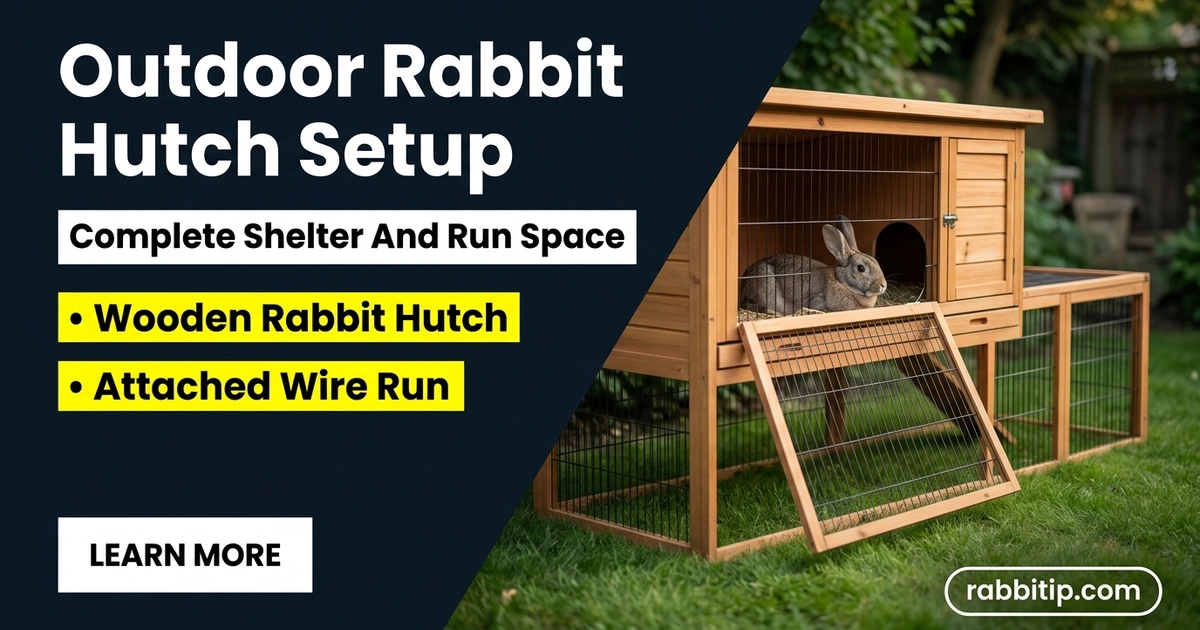
The biggest mistake is buying a hutch that is too small. An outdoor rabbit hutch setup needs space, safety, and weather care.
A rabbit needs room to hop. It must stretch, hide, eat, and rest. The hutch cannot be the whole home. It needs a safe run, a strong floor, shade, and dry bedding.
Think of this. You place a cute hutch in the yard. Then rain pools under it after one storm. That can make the whole area damp and unsafe.
Good rabbit housing is not about looks. It is about daily comfort. This guide covers size, location, safety, weather care, runs, bedding, play, and checks.
Hutch Size Requirements for Outdoor Rabbits
A safe outdoor rabbit hutch setup starts with size. If the hutch is too small, other choices get harder. Your rabbit cannot move well. It cannot get away from the mess. It cannot act in a normal way.
Think of your rabbit taking one hop. Then it hits a wall. Then it sits still for hours. That is not calm. That is too few choices.
Minimum Dimensions and Space Rules
For most rabbits, use a hutch at least 6 x 2 ft. The hutch should link to a run. According to the RSPCA, two bonded rabbits need a living area of at least 3m x 2m x 1m.
Use the three-hop rule. Your rabbit should make three full hops one way. It should stand up without its ears touching the roof. It should also lie fully stretched.
Small hutches can harm welfare. Rabbits may gain weight. They may chew bars. They may stop moving much. Rabbits hide pain well. So poor housing may look quiet at first.
This table gives a quick guide for rabbit hutch size requirements.
← Scroll to see more →
| Rabbit Size | Weight | Min Hutch Length | Min Run Area | Notes |
|---|---|---|---|---|
| Small breed | Under 4 lb | 6 ft | 8 x 4 ft | Still needs daily run time |
| Medium breed | 4 to 8 lb | 6 to 7 ft | 8 x 4 ft | Fits many pet rabbits |
| Large breed | 8 to 12 lb | 8 ft | 10 x 4 ft | Needs more turn space |
| Giant breed | 12 lb plus | 8 to 10 ft | 10 x 6 ft | Needs more height and floor space |
Sizing Up for Larger Breeds
Large rabbits need more than a long box. Flemish Giants, Rex rabbits, and other big breeds need wide turns. They also need strong floors and large doors.
Add 25 to 50 percent more floor space for big breeds. Do not count on height alone. Two-level hutches help only if ramps are wide and low. A steep ramp wastes space. It can hurt joints.
If you own a giant breed, check a breed guide first. Our guide to hutch sizing for Flemish Giants shows why many standard hutches fail big rabbits.
Check the hutch with your rabbit inside. Do not use only a tape. Watch one turn, one stretch, and three hops. That shows what your rabbit can do.
Choosing the Best Location for Your Outdoor Hutch
The best location for a rabbit hutch outside is dry and shaded. It should also be easy to check. A strong hutch can still fail in a bad spot. Think about the sun, wind, water, noise, and your daily path.
Think of this. Your rabbit has a strong hutch. But it sits by a fence where the wind blows all night. The hutch is fine. The place is not.
If you still need a hutch, start by choosing a wooden rabbit hutch that suits outdoor use. Wood needs safe treatment. It needs strong joints. It also needs a roof that sheds rain. But the spot still matters most.
Sun, Shade, and Wind Exposure
Avoid direct afternoon sun. Rabbits overheat faster than many owners expect. Morning sun with afternoon shade works better. A tree, wall, or shed can give cover.
Do not place the hutch in a wind tunnel. Gaps between fences and sheds can push cold air through the mesh. Rabbits need fresh air. So do not seal every side. Block harsh wind, but keep air moving.
North-facing spots can stay cold and damp in winter. In hot places, south-facing walls can trap heat. Check the site at noon. Check it late in the day. Check it after the rain.
Ground Surface and Placement
Raise the hutch off the ground. This helps air flow. It also helps stop damp from rising. It can make entry harder for some pests.
Avoid low ground where water pools. Mud under the run makes cleaning hard. It can also chill the floor in winter.
Use level paving, packed gravel, or firm garden ground. Do not put the whole run on wet bare soil. Rabbits can dig out. Foxes can dig in.
Keep the hutch near your normal walking route. You will spot loose locks faster. You will see empty water bowls sooner. Daily checks matter. So easy access is part of safety.
Predator-Proofing Your Outdoor Rabbit Hutch
Outdoor rabbit hutch safety depends on each weak spot. Foxes, dogs, cats, rats, and raccoons test edges. They test doors and mesh too. A predator does not need to get inside. Fear alone can make a rabbit panic.
Think of this. Your rabbit hears claws at the run after dark. Your setup must stop contact before it starts.
Wire Mesh and Hardware Cloth
For how to predator-proof a rabbit hutch, start with mesh. Chicken wire keeps chickens in. It does not keep many predators out. Use hardware cloth with a tight grid.
Choose at least 16-gauge hardware cloth. Use a 1/2-inch grid. According to the House Rabbit Society, outdoor enclosures need secure wire and strong predator care. The mesh should cover the run sides and roof.

Cover the top of the run too. Cats, hawks, and climbing pests can enter from above. A roof also gives shade and rain cover.
Stop digging from both sides. Bury the mesh 12 inches down. Or lay a wire apron flat around the outside. Grass can grow through it and hide it.
Locks, Latches, and Entry Points
Use two locks on every door. One twist latch is not enough. Raccoons can open simple latches. Dogs can push weak doors.
Check hinges, corners, roof joins, and base rails. Small gaps get wider as wood swells and shrinks. Rabbits chew too. So check inside edges.
Use carabiners, pad bolts, or two-step latches. Put one latch high and one low on tall doors. Pull each door hard from the outside to test it.
Do a dusk check before the first night outside. Look for light through gaps. Run your hand along the edges. Check for loose mesh or sharp wire.
Weatherproofing the Hutch for Year-Round Use
Rabbit hutch weatherproofing means dry shelter and fresh air. It also means a steady temperature. Rain, wind, heat, and cold all need care. A hutch can look covered but still feel damp.
Think of this. Your rabbit has thick bedding. But the wind blows through the front mesh all night. The bedding helps. The draft still wins.
Rain, Wind, and Damp Protection
Use a waterproof roof with a clear slope. Rain should run off the back or sides. It should not drip into the sleep area.
Seal outdoor wood with a pet-safe treatment. Let it dry fully before use. Check worn edges each season.
Fresh air matters as much as cover. Damp bedding can grow mold. Urine can also make strong fumes. Cover part of the mesh, not all of it.
Use clear perspex, a tarp, or fitted covers on open sides. Leave an air gap near the top. Keep the front easy to open for cleaning.
Winter Insulation and Cold-Weather Setup
An outdoor rabbit enclosure for winter needs extra bedding. It also needs draft control. Below 10°C, or 50°F, add cold care steps. According to PDSA, rabbits need care from cold, heat, damp, and poor air flow.
Pack the sleep area with deep straw. Straw traps air better than hay. Use hay for food. Use straw for warmth.
SnuggleSafe pads can help in cold snaps. Place them under bedding. Your rabbit must be able to move away. Rabbits can overheat too. Never force heat into one small space.
Cover the front mesh with clear perspex or a tarp in winter. Leave a top gap for air. Check water bottles and bowls twice a day for ice.
Setting Up the Exercise Run
An exercise run for rabbits is not an extra. It is where your rabbit builds strength. It can explore and act in a normal way. The hutch is the bedroom. The run is the living space.
Think of your rabbit racing and stopping. Then it does one binky in fresh air. That movement shows the setup works.
Run Dimensions and Materials
Use an attached run of at least 8 x 4 ft for one average rabbit. Larger pairs need more space. Giant breeds need wider runs, not just longer ones.
Choose chew-proof coated wire or hardware cloth. Avoid plastic panels for long-term outdoor use. Rabbits chew them. Predators can break them.
Make the run tall enough for your rabbit to stand up. Add a roof or secure wire top. Add one covered zone for fast hiding.
Join the hutch and run with a secure tunnel or door. The opening should be wide and low. Steep ramps can scare rabbits. They also waste space.
Dig-Proof Base Options
A dig-proof rabbit run protects both ways. Rabbits dig out when curious. Predators dig in when hungry.
Buried mesh is the strongest choice. Dig about 12 inches down along the edge. Fix the mesh to the run frame. Then fill the soil back in.
A flat wire apron also works well. Lay it out from the run edge. Cover it with turf. Check it after storms and soil shifts.
Paving slabs around the edge are easy to care for. They stop edge digging. They also help with cleaning. Slabs can get hot. Keep shaded rest spots inside the run.
Flooring, Bedding, and Enrichment
Good flooring protects feet. Good play items protect behavior. Rabbits need both each day.
Think of this. Your rabbit has food and water. But it has no place to hide or chew. It may sit still. It may chew the hutch. It may get tense during normal garden noise.
Flooring Choices and Rabbit Foot Health
Avoid full wire floors. Wire mesh can hurt hocks. Hocks are the back part of the foot. Sore hocks can be painful. They can also heal slowly.
Use solid flooring in the sleep area. Aim for at least half solid floor in rest zones. Add egg-crate foam or firm foam mats under bedding.
Rabbit hutch bedding options include straw, paper bedding, and hay zones. Use straw for warmth. Use paper bedding to soak up wet spots. Keep eating hay clean and away from wet corners.
Clean wet bedding each day. Replace deep bedding often in cold weather. Check feet each week. Look for red skin, fur loss, or swelling.
Hiding Spots and Behavioral Enrichment
Rabbits need hiding places. They are prey animals. A hide box lowers stress during noise or visits. According to PDSA, rabbits also need enrichment and space for natural behavior.
Add tunnels, hay-filled boxes, willow toys, and low platforms. Use a digging box with child-safe sand or clean soil. Keep it dry. Make it easy to remove.
Ideas from an indoor rabbit cage setup can work outdoors too. Cardboard boxes, hay racks, and safe chew toys still help. Remove anything that gets wet.
Change one item each week. Rabbits like a space they know. But they still need interest. Small changes keep the run useful without too much stress.
Transitioning a Rabbit from Indoor to Outdoor Living
A slow move helps prevent stress. It also helps prevent shock from cold or heat. Indoor rabbits need time to adjust. New sounds, smells, and air can feel like a lot.
Think of your rabbit hearing birds, cars, and wind for the first time. That is too much for one day.
Start with 1 to 2 hours outside each day. Keep this routine for 1 to 2 weeks. Stay close during the first sessions.
Watch for stress signs. These include hiding all day, not eating, fast breathing, or lots of thumping. Rabbits can get worse fast. Call a rabbit-savvy vet if eating or droppings change.
Do not move a rabbit outdoors in winter. Wait for mild weather. This lets the coat and routine adjust. For a full step plan, use our guide on how to transition your rabbit to outdoor living.
Seasonal Maintenance Checklist
Outdoor housing changes with the weather. Your hutch needs seasonal checks. One setup day is not enough.
Think of this. The hutch looked great in April. By July, the afternoon sun hits the run for four hours. A quick check can stop that.
Spring is repair season. Check winter damage, loose mesh, swollen doors, and worn roof felt. Deep clean the hutch. Reseal safe wood if needed.
Summer is the heat season. Check the shade at the hottest time. Give fresh water twice a day. Watch for less eating. Heat can raise the risk of GI stasis. This means the gut slows down.
Autumn is prep season. Weatherproof before the first frost. Stock straw, spare covers, and extra water bowls.
Winter is check season. Check the temperature each day. Refresh deep bedding. Keep water free of ice. Keep vents open, but block drafts.
Use this checklist as a fast seasonal guide.
← Scroll to see more →
| Season | Key Task | Priority |
|---|---|---|
| Spring | Repair roof, mesh, hinges, and wood finish | High |
| Summer | Check shade and refill water twice daily | High |
| Autumn | Add covers, straw, and frost prep supplies | High |
| Winter | Check insulation, vents, and ice-free water | High |
Frequently Asked Questions
Can rabbits live outside all year?
Rabbits can live outside all year if the setup is safe. It must be dry and large enough. They need predator care, shade, winter warmth, and daily checks. Single rabbits also need close social time and play.
What is the safest wire for an outdoor rabbit hutch?
Hardware cloth is the safest common wire for outdoor hutches. Use at least 16-gauge mesh with a 1/2-inch grid. Chicken wire bends too easily. It does not give strong predator care.
How cold is too cold for an outdoor rabbit?
Cold can be a concern below 10°C, or 50°F. Add deep straw at that point. Block drafts and check the water often. Wet bedding or wind makes cold much more risky.
Does a rabbit hutch need an attached run?
A rabbit hutch needs an attached run for daily movement. The hutch alone is too small for hops, play, and exploring. A secure run also cuts boredom and stress.
What should I put on the floor of an outdoor rabbit hutch?
Use solid flooring with bedding that soaks up wet spots. Add warm straw in the sleep area. Avoid full wire floors. They can hurt rabbit feet. Foam mats under bedding add comfort when kept dry and clean.
Build the Hutch as One Safe System
A safe outdoor rabbit hutch setup works as one system. Space, outdoor rabbit hutch safety, and weather care must all work together.
Review the seasonal checklist before each weather change. Then choose the right structure with our guide to choosing a wooden rabbit hutch.
