
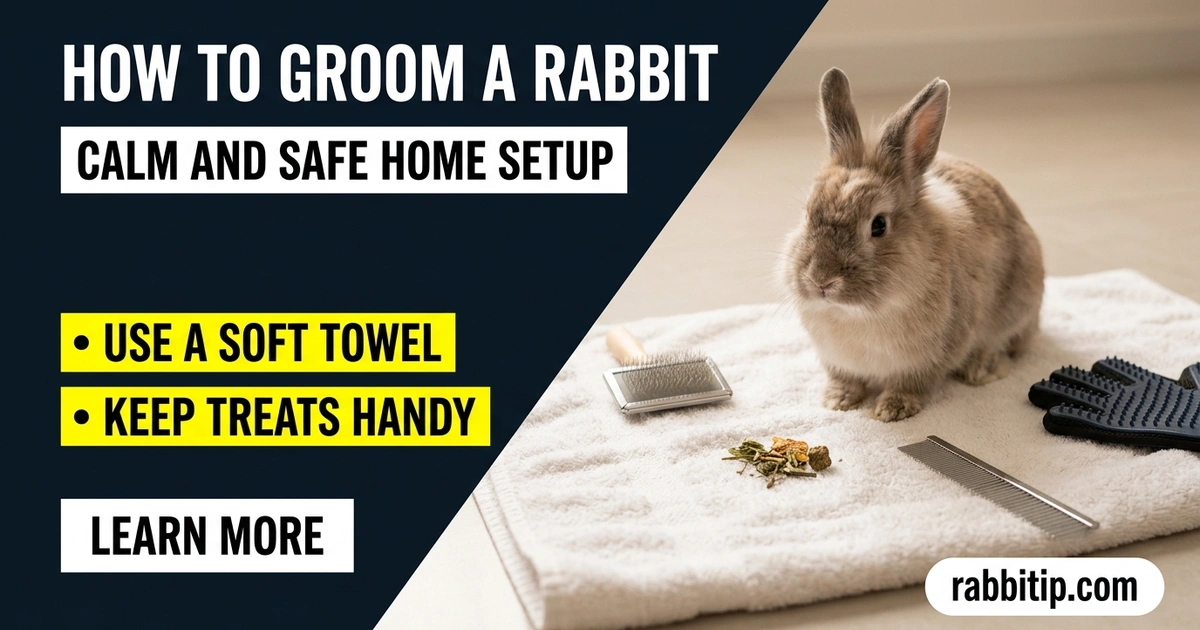
Safe rabbit grooming starts with calm handling. Loose fur can bother your rabbit fast.
When you groom a rabbit, you remove shed fur. You can also find mats and sore skin early. I learned this fast. Rabbits need soft hands.
One rough brush stroke can scare them. They may kick, run, or hide. That fear makes sense. Rabbit skin is thin.
This guide shows safe tools and calm steps. It also shows when to stop. You will know when to get help.
What Rabbit Grooming Includes at Home
Rabbit grooming is basic care. It is not just for looks. It helps with fur, nails, skin, feet, and the bottom.
Best Friends Animal Society says brushing and nail care help rabbits. I see grooming as a quick health check.
Your rabbit may look clean on top. But the tail area may hide a wet clump. Rabbits hide pain well. So small checks matter.
A simple plan helps you follow rabbit grooming basics with less stress.
Brushing loose fur
Brushing removes loose fur. This helps your rabbit swallow less hair.
Use slow, light strokes. Stop often. Let the brush do soft work.
Five calm minutes can be enough.
Checking mats, bottom, feet, and skin
Feel the coat before you brush. Check behind the ears. Check the chest, feet, belly edge, and tail.
Do not pull a knot. Rabbit skin can tear.
Look for flakes, red skin, fleas, mites, wet fur, or stuck stool. These signs need care. Do not force the brush.
Nail trims and when they belong in the routine
Nails are part of grooming. But not every time.
Check nails while your rabbit rests. If nails snag cloth, plan a trim. If toes twist, plan a trim.
Nervous rabbits need shorter tasks. Brush one day. Trim nails another day.
Rabbit Grooming Kit: Tools to Prepare First
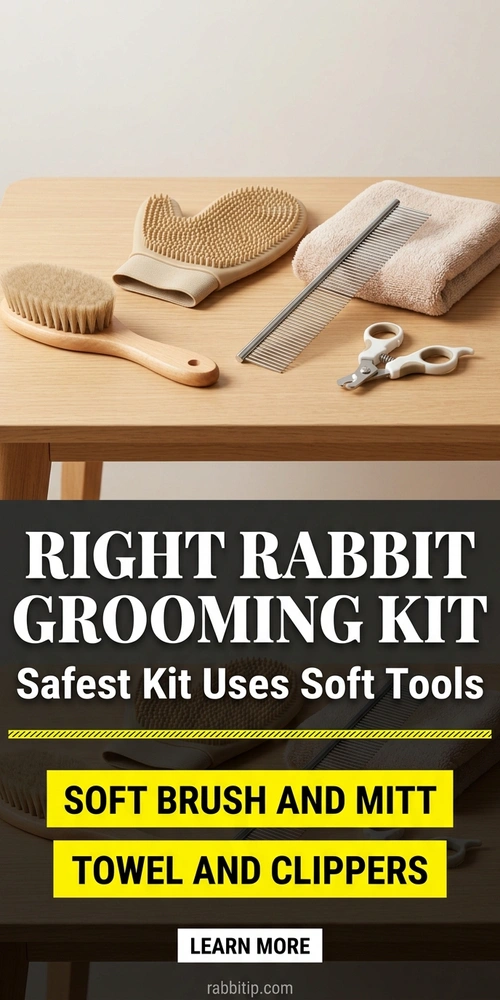
A good rabbit grooming kit is simple. Use soft tools, a towel, treats, and good light.
Rabbit Welfare Association and Fund warns against harsh tools. Rough handling can hurt rabbits.
A bad tool can catch fur. Then your rabbit may jump. You may panic too. So pick tools first.
Soft brush, rubber brush, or pimple mitt
A soft rabbit grooming brush works for many coats. A rubber brush also helps during shedding. A pimple mitt can lift loose fur too.
Press lightly. Be extra soft over the hips and spine.
For fine fur, use damp hands after brushing. Loose hair will stick to your palms.
Comb, towel, nail clippers, and treats
A comb helps find small knots. Use it slowly. Stop if it catches.
A towel gives the feet grip. Small sharp clippers work best for nails.
Treats build trust. Use tiny herb pieces.
Tools to avoid around delicate rabbit skin
Do not use scissors near skin at home. Skip sharp slickers and harsh rakes. Avoid hard flea comb pressure.
Rabbit skin is thinner than it looks. One slip can cut deep.
Do not chase mats with blades.
← Scroll to see more →
| Coat Type | Brushing Frequency | Best Tool | Extra Caution | Purpose |
|---|---|---|---|---|
| Short-haired rabbit | Weekly | Soft brush | Use light pressure | Remove loose fur |
| Heavy shedding coat | Daily in moult | Rubber mitt | Stop if skin warms | Cut loose fur |
| Long-haired rabbit | Every 1 to 2 days | Comb and soft brush | Check tail and pits | Stop mats |
| Mat-prone rabbit | Short daily checks | Fingers and comb | Never pull knots | Find tangles early |
How Often Should You Groom a Rabbit?
Most rabbits need a weekly coat check. During heavy shed, they need more help.
rabbit.org says rabbits can shed a lot. Long-haired rabbits need steady coat care.
A week may work in calm months. During moult, it may not.
If fur covers your sleeve, it is shedding time. It may reach the rug too. It may even reach your tea.
Weekly brushing baseline
If you ask, “How often should I brush my rabbit?” start weekly.
Keep it short and kind. Five calm minutes beat twenty forced minutes.
Check skin, nails, feet, and the bottom too.
Shedding or moulting season
During moult, brush daily or every other day. Moult means the coat sheds in waves.
You may see tufts or rough coat lines.
Rabbits wash themselves often. Extra fur can enter the gut. Brushing lowers that fur load.
Long-haired rabbits and Lionheads
Long-haired rabbit grooming takes more time. Lionheads often mate near the mane. They also mat at the chest and tail.
Use fingers first. Then use a comb.
Do not wait for a hard knot. Small tangles are safer to fix.
Step-by-Step: How to Groom a Rabbit at Home
This calm plan works well for me. It keeps your goals small. It keeps your rabbit supported.
Call a rabbit-savvy vet first if needed. Do this for pain, wounds, or a dirty bottom.
Your rabbit may accept two brush strokes. Then it may tuck its feet. That means slow down.
Good grooming is built from tiny wins.
Step 1: Set up a non-slip grooming area
Pick the floor if you can. Use a low table only with support.
Place a towel down for grip. Keep tools on one side.
Close doors first. A scared rabbit can bolt fast.
Step 2: Let your rabbit settle before touching the coat
Let your rabbit sniff the towel. Give one small treat.
Stroke the head if your rabbit likes it.
Do not start at the back end. Many rabbits hate that. Start where touch feels safe.
Step 3: Brush with the fur direction first
Brush with the fur growth. Use short strokes. Move from shoulders to rump.
Keep one hand near the chest. Steady the rabbit. Do not pin it.
Watch the skin. If it lifts, press less. Use a softer tool or your fingers.
For a thick shed, lift loose fur first. Then brush the top. This helps stop pulling.
Step 4: Remove loose fur in short sessions
Work in small zones. Brush shoulders, sides, then rump. Then stop.
Short sessions protect trust.
Rabbits groom later too. Loose fur may still be swallowed. Remove only what comes free.
Leave stubborn spots for another day.
If your rabbit turns, thumps, or freezes, pause.
Step 5: Check behind the ears, chest, belly edge, and tail area
Mats hide where fur rubs. Check behind the ears and under the chin. Check the chest, belly edge, and tail base.
Use fingertips first.
Do not flip your rabbit onto its back. This can cause panic and injury.
Check low areas while your rabbit stays upright.
If you cannot see safely, stop. Try another day with calm help.
Step 6: Inspect the bottom for mats or soiling
Lift the tail only as much as needed. Look for stool, urine stains, wet fur, or mats.
This area can get sore fast.
Smell matters too. Strong urine smell can mean more than mess. It may mean pain or urine leaks.
Use a damp cloth for small dirt only. Do not soak the coat.
Step 7: Reward, pause, and end before stress escalates
End while your rabbit feels safe. Give a treat. Let your rabbit hop away.
Make the last memory calm.
Trust builds over many short sessions. Two good minutes matter. Next week may be six.
How to Groom a Rabbit That Hates It
To groom a rabbit that hates it, lower the goal. Do not aim for one long session.
Teach your rabbit that grooming is safe. It should not feel trapped or hurt.
Rabbit Welfare Association and Fund says not to use trancing as routine care.
Your rabbit may run under the sofa. I have been there. The sofa often wins.
Signs your rabbit is stressed
Stress signs include wide eyes and fast breathing. Your rabbit may thump, freeze, lunge, or climb away.
Tooth grinding can mean pain or fear. Stop before kicking starts.
Do not punish a growl or nip. Your rabbit is telling you something.
Short-session training approach
Place the brush nearby. Do not use it yet. Give a small treat.
Next time, touch one shoulder. Then stop.
Build in tiny steps. Brush once, reward, and release.
Rabbits learn patterns. Ending early can teach safety.
Use the same quiet time each day. Routine lowers surprise.
Why trance or hypnotising is not a grooming shortcut
Trancing means placing a rabbit on its back. The rabbit may go still. Some call this hypnosis.
Still does not mean calm.
This pose can cause fear and injury. Use upright handling.
If grooming needs force, change the plan.
What to Do About Matted Fur
Matted fur needs patience. Do not pull it.
A mat forms when loose hair twists with live hair. Tight mats can pinch skin. They can hide sores too.
I treat each mat like thin paper. Rabbit skin can feel that fragile.
A small knot behind the ear may move freely. That is different from a hard mat near the bottom.
Small surface tangles versus tight mats
A small tangle may loosen with fingers. Hold the fur base. This protects the skin.
Then tease the edge apart.
A tight mat needs skilled help. Do not cut across it. Skin can rise into the mat.
Keep a rabbit first aid kit for small care needs. Do not treat deep wounds at home.
Rabbit matted fur on the bottom: extra caution
Rabbit’s matted fur on the bottom needs care. They may involve urine, stool, sores, or flies.
A dirty bottom is not just grooming. It can mean pain, weight issues, teeth trouble, or bladder trouble.
Wet mats tighten as they dry. They can pull hard on the skin.
Do not bathe the whole rabbit.
When to use a professional groomer or vet
Use professional rabbit grooming for tight mats. Use it for long coats you cannot manage. Use it for rabbits that panic.
Pick someone with a rabbit skill. Dog or cat skill is not enough.
Call a vet for wet skin or wounds. Call for maggots, strong urine smell, or sudden soiling.
← Scroll to see more →
| Grooming Problem | Safe Home Step | Do Not Do | Call Vet/Groomer When |
|---|---|---|---|
| Small loose tangle | Tease with fingers | Yank with a comb | Skin pulls or reddens |
| Dirty bottom | Wipe small dirt | Soak the rabbit | Skin is wet |
| Overgrown nails | Plan a calm trim | Cut blind | Nails curl |
| Wet fur | Dry the surface | Give a full bath | Rabbit is cold or weak |
| Fleas or mites | Note clear signs | Use dog flea products | You see sores or bugs |
| Severe stress | Stop and shorten | Force restraint | Panic happens each time |
Should Grooming Include Nail Trimming?
Nail trimming can be part of grooming. But timing matters.
I do not trim nails after hard brushing. Too many tasks cause stress.
Your rabbit may sit well for brushing. Then it may pull a foot back. That means the task changed. Listen to that.
Check nails weekly while you groom. Trim only when you can hold the foot safely. You must see the quick. The quick is the blood inside the nail.
For full steps, read how to trim rabbit nails safely.
If nails are dark, curled, cracked, or long, ask for help. A groomer or vet nurse can show the angle.
Can You Bathe a Rabbit During Grooming?
Do not give a full bath during normal grooming. Wet fur can chill a rabbit. It can also cause high stress.
Best Friends Animal Society says rabbit baths are risky. They are usually not needed.
A dirty tail patch may look like a bath job. But a sink bath can make things worse.
Use spot cleaning instead. Wipe a small area with a damp cloth. Then dry it well.
Read can you bathe a rabbit before using water?
Never leave damp fur on the skin. It can hide red or sore spots.
Health Problems You Might Notice While Grooming
Grooming can show health problems early. That is why weekly checks help.
You may see flakes, wet fur, weight loss, or mood shifts.
rabbit.org says mites and scent gland issues can show on the skin. Urine leaks can show in the coat too.
Your rabbit may still eat well. But wet back legs can matter. Grooming helps you spot that clue.
Fleas, mites, flakes, or skin redness
Look for moving specks. Look for flakes, scabs, or red skin.
Mites can cause flakes along the back. Fleas may leave dark dirt in fur.
Do not use dog or cat flea products. Use them only if a vet says so.
Wet fur, urine staining, or incontinence
Wet fur near the bottom needs care. Wet tail or leg fur matters too.
Urine can burn skin. Incontinence means urine leaks or collects.
Note when you first saw it. Then check common rabbit diseases for signs to report.
Appetite or behavior changes after grooming
Your rabbit should eat after grooming. It should act normally too.
Watch hay eating, droppings, posture, and hiding. Pain can look like stillness.
Rabbits need steady gut movement. Call a vet if eating drops.
Common Rabbit Grooming Mistakes to Avoid
Most mistakes come from rushing. Rabbits do better with small tasks.
Stopping early is often the skilled choice.
You may see one last loose tuft. But your rabbit may already look tense. Leave the tuft. It is not worth a kick.
Avoid these common mistakes:
Pulling mats.
Brushing too hard.
Using scissors near the skin.
Bathing the whole rabbit.
Trimming nails after stress starts.
Ignoring wet fur or sores.
Ignoring flakes or sudden soiling.
Holding your rabbit on its back.
Making sessions too long.
Bunny grooming dominance can confuse owners. Rabbits may lick, nudge, or ask for grooming.
That does not mean you should force brushing. It means your rabbit has social rules too.
Quick FAQ
Do rabbits like when you groom them?
Some rabbits like gentle grooming. It must feel safe.
Many prefer head or shoulder strokes first. Build trust before brushing the rump or belly edge.
What is bunny grooming dominance?
Bunny grooming dominance is a social behavior. One rabbit asks another for grooming.
A rabbit may lower its head. It may nudge for petting.
With people, it can mean, “pet me.” It does not allow rough brushing.
What is the 3-3-3 rule for rabbits?
The 3-3-3 rule is a settling guide. A new rabbit may need 3 days to calm down. It may take 3 weeks to learn routines. It may take 3 months to feel at home.
It is not a strict rule. Keep grooming very short at first.
Is professional rabbit grooming worth it?
Professional rabbit grooming can be worth it. Use it for tight mats, long coats, stress, or hard nail trims.
Choose a groomer with real rabbit skills. Ask how they avoid trance. Ask how they avoid full baths and sharp tools.
Build a Gentle Weekly Grooming Habit
Gentle weekly grooming helps your rabbit. It keeps loose fur, mats, nails, and skin issues easier to manage.
Start with one short session today. Use the right rabbit grooming kit. Then, learn how to trim rabbit nails safely, or can you bathe a rabbit when you need the next safe step?
