
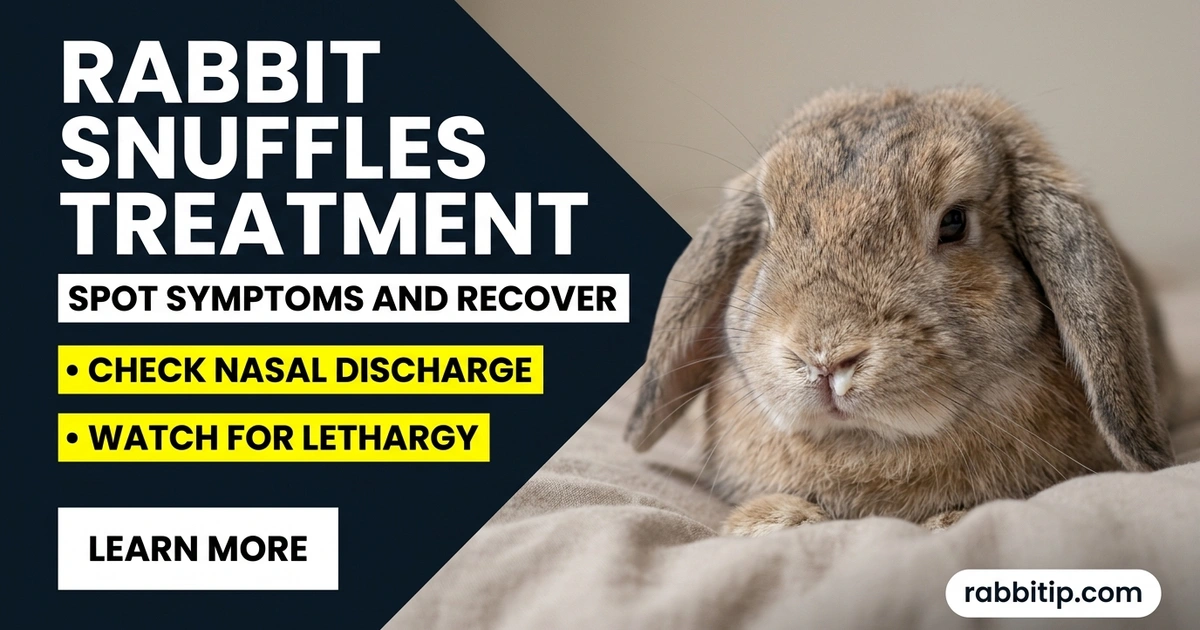
Your rabbit is sneezing. Its nose is wet and runny. These signs may mean snuffles. Snuffles is a serious bacterial infection. Rabbit snuffles treatment works best when started early. But many owners wait too long. The symptoms can look mild at first.
Snuffles is not a simple cold. A specific type of bacteria causes it. Left alone, it can spread to the lungs, eyes, and ears. The good news is that vets treat snuffles every day. Most rabbits can recover with the right care.
Picture this: your rabbit was fine last week. Now it sneezes every few minutes. Its front paws look damp and matted. You are not sure if this is normal or dangerous. That worry is exactly why this guide exists.
Rabbit owners often lose days searching for answers online. One friend almost lost her Holland Lop. She thought the sneezing would pass on its own. It did not. That taught me how much clear, honest information matters.
This guide covers every step. You will learn the symptoms to watch for. You will learn what your vet will do, which drugs work, how to care for your rabbit at home, and how to stop snuffles from coming back.
What Is Snuffles in Rabbits?
Snuffles is a common name for an upper breathing infection in rabbits. A bacterium called Pasteurella multocida usually causes it. According to the MSD Veterinary Manual, this bacterium lives in the nose of many rabbits. It does not always cause problems. These rabbits are called carriers.
A carrier rabbit may look fully healthy. But stress, illness, or poor living conditions can weaken its immune system. When that happens, the bacteria become active. That is when snuffles begins.
Snuffles is not the same as a human cold. In most cases, it does not go away on its own. It can spread to other parts of the body over time. Without treatment, a mild nasal infection can become pneumonia, ear infections, or abscesses. For a wider look at breathing problems in rabbits, see our guide on rabbit respiratory infection treatment.
Picture two rabbits sharing a space. One looks healthy but carries the bacteria silently. The other is young and stressed from a recent move. That stressed rabbit is most likely to get sick first.
Symptoms of Rabbit Snuffles
Knowing the rabbit snuffles symptoms early gives your pet the best chance. The signs change as the infection gets worse. Here is what to look for at each stage.
Early Warning Signs
The first signs of snuffles are easy to miss. Your rabbit may sneeze a few times a day. You might see a thin, clear discharge from one or both nostrils. According to the Rabbit Welfare Association & Fund, many owners first spot the problem by checking their rabbit’s front paws.
Why the paws? Because rabbits wipe their noses with them. Matted or crusty fur on the inside of the front paws is a reliable early clue. Your rabbit may also seem slightly less active than normal.
Appetite changes can appear early too. Your rabbit might eat a bit less. It may take longer to finish meals. These signs are subtle. But catching them now means treatment can start before the infection spreads deeper.
Advanced and Severe Symptoms
When snuffles gets worse, the signs become harder to ignore. The nasal discharge may thicken. It can turn yellow or green. This points to a worsening bacterial infection. Your rabbit may breathe with its mouth open. It may make wheezing sounds.
Head tilt, also called torticollis, means the infection has reached the inner ear. Eye discharge or swelling around the eyes suggests conjunctivitis. This is an eye infection linked to blocked tear ducts. If your rabbit shows eye symptoms, our article on rabbit eye infection treatment offers detailed help.
Abscesses can also form. These are pockets of pus under the skin. In the worst cases, the bacteria reach the lungs. This causes pneumonia, which leads to fast, labored breathing and a serious risk to life.
Use the table below to decide how quickly your rabbit needs help.
← Scroll to see more →
| Severity Level | Symptoms Present | Recommended Action | Urgency |
|---|---|---|---|
| Mild | Clear nasal discharge, occasional sneezing, slightly matted paws | Book a vet visit within 1 to 2 days | Low to moderate |
| Moderate | Thick or colored discharge, reduced appetite, lethargy, watery eyes | See a vet within 24 hours | Moderate to high |
| Severe | Open-mouth breathing, head tilt, abscesses, refusal to eat | Seek emergency veterinary care immediately | Critical |
What Causes Snuffles in Rabbits?
Knowing the cause helps you protect your rabbit from future infections. Snuffles starts with bacteria. But the environment often decides which rabbits get sick.
Pasteurella multocida and Co-Infections
Pasteurella multocida is the main bacterium behind snuffles. According to the MSD Veterinary Manual, most rabbits carry this organism in their nasal passages from birth. It spreads through direct contact, shared food bowls, and sneeze droplets.
But Pasteurella is not always the only bacteria involved. Bordetella bronchiseptica can also infect rabbits. This is the same bacterium that causes kennel cough in dogs. Staphylococcus aureus sometimes joins as a second infection. These extra infections can make symptoms worse and treatment harder.
A carrier can live for years without symptoms. The bacteria only cause disease when the rabbit’s immune defenses drop. So healthy carriers and sick rabbits can live in the same home.
Risk Factors That Trigger Outbreaks
Bacteria alone do not always cause illness. Certain conditions push a carrier into active disease. Stress is the most common trigger. Moving to a new home, bonding with a new rabbit, or a loud setting can weaken your rabbit’s immune system.
Poor air flow traps harmful gases around your rabbit. Ammonia from soiled bedding irritates the airways. It makes them more open to infection. Crowding in homes with many rabbits also raises risk.
Picture keeping your rabbit’s hutch in a closed garage with no air flow. The ammonia builds up. Within weeks, a healthy carrier rabbit could develop full-blown snuffles. Fresh air matters more than most owners realize.
How Vets Diagnose Snuffles
A vet visit is nothing to dread. Knowing what to expect helps you feel more prepared. And getting the right diagnosis is the fastest path to the right rabbit snuffles treatment.
Your vet will start with a physical exam. They will check your rabbit’s nose, eyes, ears, and breathing. They will also feel for lumps or abscesses under the skin and jaw.
The next step is often a nasal swab. The vet sends this swab to a lab for a culture and sensitivity test. This test grows the bacteria and finds out which drugs will kill them. According to PetMD, this step is important. Not all strains of Pasteurella respond to the same drugs.
For ongoing or recurring cases, your vet may suggest skull X-rays. These images show whether the infection has spread into the sinuses, inner ear, or jaw bones. X-rays help the vet decide if surgery or long-term treatment is needed.
Picture walking into the clinic with your sneezing rabbit. The vet gently swabs its nose and listens to its lungs. You get the test results within a few days. You leave with a clear plan. That certainty is worth the visit.
Rabbit Snuffles Treatment Options
Treatment for snuffles almost always requires vet care. Please talk to your vet before starting any drug or home remedy. The right treatment depends on the type of bacteria and how far the infection has spread.
Antibiotic Therapy
Antibiotics are the main tool for treating rabbit snuffles. Your vet will choose a drug based on the test results. According to PetMD, the most common options are listed in the table below.
← Scroll to see more →
| Antibiotic | Route | Typical Duration | Key Notes |
|---|---|---|---|
| Enrofloxacin (Baytril) | Oral | 2 to 6 weeks | Most commonly prescribed first-line drug for rabbit snuffles treatment antibiotics |
| Chloramphenicol | Oral | 2 to 4 weeks | Effective for resistant strains; requires careful dosing |
| Trimethoprim-sulfa | Oral | 2 to 4 weeks | Good broad-spectrum option; generally well tolerated |
| Penicillin G | Injectable only | 2 to 6 weeks | Effective but must never be given orally to rabbits |
The House Rabbit Society warns that oral penicillin is deadly to rabbits. It destroys the healthy gut bacteria they need to digest food. Penicillin G must only be given by injection under vet supervision.
Finishing the full course of antibiotics is critical. Stopping early, even if your rabbit looks better, lets resistant bacteria survive. This makes the next infection harder to treat.
Antibiotics can also affect your rabbit’s gut. Rabbits depend on a careful balance of gut bacteria called cecal flora. Long antibiotic use can disrupt this balance. It can cause GI stasis in rabbits, a dangerous slowdown of the digestive tract. Loose stools are another possible side effect. If your rabbit develops loose stools during treatment, our guide on rabbit diarrhoea treatment can help.
Here is something worth knowing: always offer extra hay during antibiotic treatment. The fiber helps support gut movement. It also lowers the chance of digestive problems.
Additional Veterinary Treatments
Some cases need more than antibiotics alone. Nebulization therapy delivers medicated mist into your rabbit’s airways. This helps loosen mucus and delivers medicine right where the infection lives. As noted in the Textbook of Rabbit Medicine by Molly Varga, this therapy can improve outcomes for rabbits with deep breathing problems.
Nasal flushes clear stubborn discharge from blocked nasal passages. Your vet performs this under light sedation. Tear duct flushing helps when the infection has blocked the nasolacrimal duct. This is the tiny channel connecting the eye to the nose.
For rabbits with abscesses, surgical drainage may be needed. Rabbit abscesses contain thick, paste-like pus that does not drain on its own. Your vet will open, clean, and pack the wound. This may need multiple follow-up visits.
Safe Home Care During Treatment
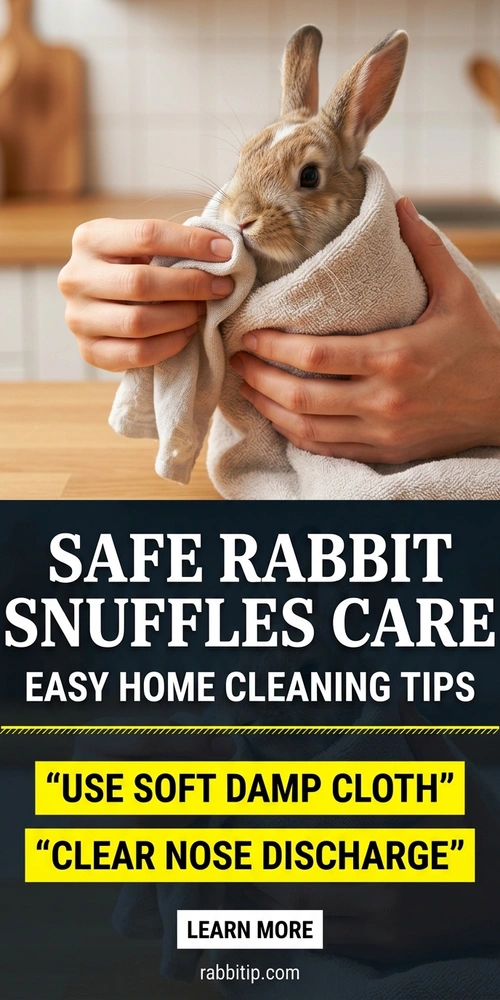
Your rabbit needs comfort and support at home during treatment. You play a key role in its recovery, even between vet visits.
Use a warm, damp cloth to gently clean crusty discharge from around the nose. Do this two to three times a day. According to the Rabbit Welfare Association & Fund, keeping the nostrils clear helps your rabbit breathe and eat more easily.
Some owners ask about rabbit snuffles treatment natural options like steam therapy. You can bring your rabbit into a steamy bathroom for 10 to 15 minutes. The moist air may help loosen mucus. But steam is not a cure. It is a comfort step only. Never place your rabbit near boiling water or a direct steam source.
Keep your rabbit well hydrated. Offer fresh water in a bowl, not just a bottle. Sick rabbits may drink less. You can also offer water-rich greens like romaine lettuce or cilantro. Watch how much food your rabbit eats each day. A sudden drop in appetite needs a vet call.
Recovery Timeline and Prognosis
Knowing what to expect during recovery reduces stress for you and your rabbit. Snuffles recovery is not always fast. But steady progress is a good sign.
Week 1 to 2: You may notice less sneezing and thinner nasal discharge. Your rabbit’s energy level should start to improve. Appetite often returns to normal during this time.
Week 2 to 4: Nasal discharge should decrease further or stop fully. Your rabbit should be grooming itself again. Matted paws should begin to look clean.
Week 4 to 6: If your vet prescribed a full six-week course, the final weeks focus on clearing all remaining bacteria. Do not stop antibiotics early. Your vet may recheck your rabbit at the end of this period.
According to research in the Journal of Exotic Pet Medicine, relapse rates for Pasteurella infections range from 10 to 30 percent even after a full treatment course. This happens because some bacteria hide deep in the sinuses or nasal passages. Antibiotics can struggle to reach those areas.
Can snuffles kill rabbits? Yes, it can. Untreated snuffles that spreads to the lungs or blood can be fatal. But with early vet care, most rabbits survive and recover well.
Some rabbits become chronic carriers after treatment. They test positive for Pasteurella but show no symptoms. These rabbits can live normal lives. But they may relapse during stressful times. Regular vet checkups help catch any return of symptoms early.
Picture your rabbit finishing its last dose of Baytril. It is eating well, breathing clearly, and hopping around the room. That moment is the goal. And for most treated rabbits, it is a realistic one.
How to Prevent Rabbit Snuffles
Prevention is easier than treatment. A few changes to your rabbit’s environment can lower the risk of snuffles greatly.
Husbandry and Environment
Clean air is your rabbit’s best defense. According to the PDSA, good air flow in your rabbit’s living space reduces harmful ammonia gas. Ammonia comes from urine-soaked bedding. It irritates the airways and weakens the natural barriers against infection.
Change bedding every one to two days. Use paper-based or dust-free bedding. Avoid cedar or pine shavings. These release oils that irritate rabbit lungs. And choose dust-extracted hay to reduce airborne particles during feeding.
Keep the living area at a stable temperature. Sudden cold drafts can stress your rabbit’s immune system. But a stuffy, sealed room is just as dangerous. Aim for fresh air flow without direct wind hitting the enclosure.
Reduce stress wherever possible. Give your rabbit a quiet hiding spot. Avoid sudden loud noises. Keep handling sessions calm and predictable. A relaxed rabbit has a stronger immune system.
Quarantine Protocol for Multi-Rabbit Homes
Snuffles spreads easily between rabbits. If one rabbit is diagnosed, separate it from all other rabbits right away. Use a different room if possible, not just a different cage in the same space.
Use separate food bowls, water bottles, and litter boxes. Wash your hands and change your clothes before moving between the sick rabbit and healthy ones. Pasteurella spreads through sneeze droplets and direct nose contact. Even brief shared time carries risk.
After your sick rabbit finishes treatment and shows no symptoms for at least two weeks, you can begin a slow reintroduction. Start with short supervised sessions. Watch both rabbits for any signs of sneezing or discharge.
Picture having three bonded rabbits. One develops snuffles. Separating them is hard. But two weeks of separation could save the other two from getting sick. The short stress of separation is far less than treating three sick rabbits at once.
Is Rabbit Snuffles Contagious to Humans or Other Pets?
This question comes up often, and the answer is good news. Pasteurella multocida can technically infect humans, but it is extremely rare from rabbit contact. Most human Pasteurella cases come from cat or dog bites, not from sneezing rabbits.
Your dogs and cats face a slightly higher risk. Bordetella bronchiseptica, one of the co-infection bacteria, can pass between species. Keep your sick rabbit away from other household pets during treatment.
Practice basic hygiene. Wash your hands after handling your sick rabbit. Clean any surfaces it touches. Avoid letting it near open cuts or wounds on your skin.
But do not panic. You do not need to rehome your rabbit or avoid contact. Simple hand washing and separation during the active infection period is enough for most households.
Frequently Asked Questions
Can rabbits recover from snuffles on their own?
Most rabbits cannot fight off snuffles without vet help. Pasteurella multocida hides deep in the nasal passages. A very mild case might appear to resolve. But the bacteria usually remain and flare up again later. Vet-prescribed antibiotics give your rabbit the best chance of a full recovery.
Can snuffles kill rabbits?
Yes, untreated snuffles can be fatal. The infection can spread from the nose to the lungs. This causes pneumonia. It can also enter the blood and lead to organ failure. Early treatment greatly improves survival rates.
How long does snuffles last in rabbits?
A typical course of antibiotic treatment runs two to six weeks. Some rabbits improve within the first week. Others need the full six weeks. Chronic cases may need repeated treatment over several months. Your vet will guide you based on your rabbit’s progress.
Is snuffles treatment expensive?
Costs vary by location and severity. A basic vet visit with a nasal swab and antibiotics may cost between $75 and $200. Advanced cases needing X-rays, nebulization, or surgery can reach $500 or more. Pet insurance or a vet savings fund can help manage these costs.
Helping Your Rabbit Beat Snuffles Starts Today
Rabbit snuffles is a serious bacterial infection. But it is treatable. Early vet care with the right antibiotics, consistent home support, and a clean living space give your rabbit the strongest chance of full recovery.
If your rabbit is sneezing or showing nasal discharge right now, book a vet visit today. Do not wait to see if it gets worse. The sooner treatment starts, the better the outcome. If your rabbit is already in treatment, bookmark this guide. Refer back to the home care steps and recovery timeline as needed.
For related health concerns, read our guide on rabbit respiratory infection treatment for a wider look at breathing problems. If your rabbit also has eye symptoms, our rabbit eye infection treatment article walks you through what to do. Share this guide with other rabbit owners who might need it.
