
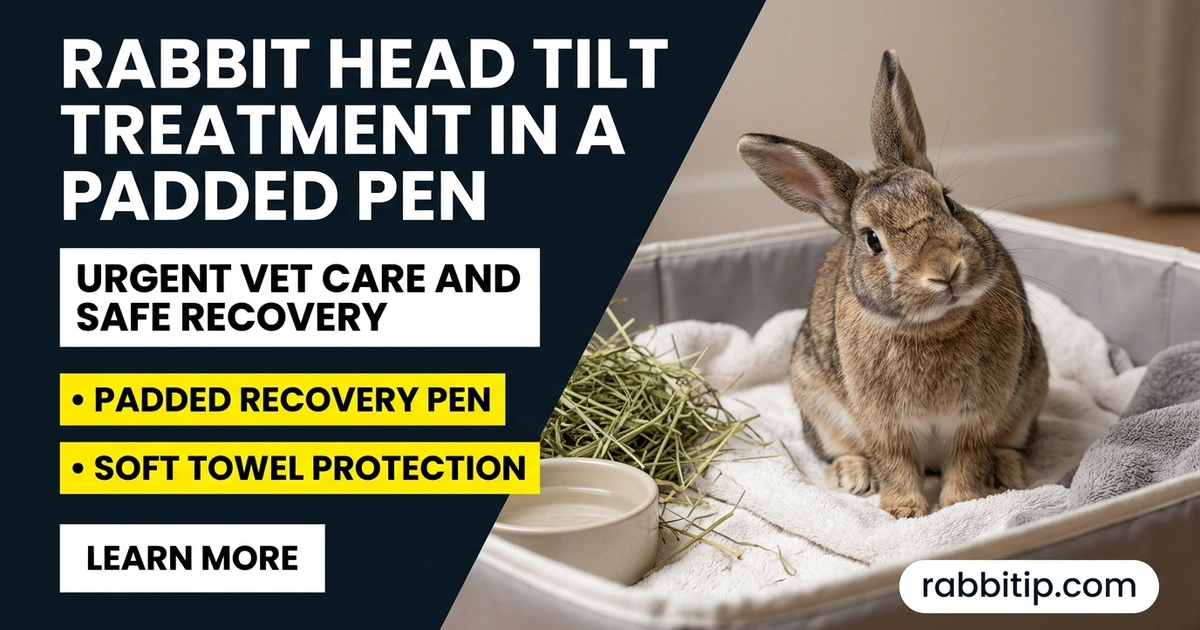
What Rabbit Head Tilt Means
Rabbit head tilt can feel scary fast. Your rabbit may lean, roll, spin, or stop eating. So, the rabbit head tilt treatment starts with a vet call. Do not wait to see if it passes.
Picture this. Your rabbit looks fine at breakfast. By lunch, one ear points down. You may feel guilt or panic. Many owners search for home fixes. But the safest first step is a rabbit vet.
Define head tilt, wry neck, torticollis, vestibular disease
Head tilt means your rabbit holds its head sideways. Wry neck in rabbits is the common name. Vets may call it torticollis. They may also call it vestibular disease.
The vestibular system helps with balance. When it fails, your rabbit feels dizzy.
The tilt is a sign. It is not a diagnosis. Ear infection, E. cuniculi, injury, and other problems can look alike. Rabbits hide pain well. Even a small tilt needs care.
State urgent first step: contact an exotic vet
Call an exotic vet the same day. Ask for urgent help if your rabbit rolls. Also, call if it will not eat. Call if the eyes flick fast.
Keep your rabbit low to the floor. Do this while you arrange care.
Do not try ear drops. Do not use human medicine. Do not try balance tricks. Head tilt can also stop gut movement. This guide covers signs, causes, care, and recovery.
Is Rabbit Head Tilt an Emergency?
Rabbit head tilt can be an emergency. It is urgent if eating, balance, comfort, or safety changes. According to PDSA, head tilt needs vet contact. Causes can include ear disease. They can also include brain or nerve issues. Treat any new tilt as urgent.
Red flags: rolling, unable to stand, not eating, seizures, trauma
Call an exotic vet at once if your rabbit rolls. Call if your rabbit cannot stand. Call if it spins or falls hard. Also, call if it stops eating hay or pellets.
Other red flags include seizures. Sudden weakness is also serious. Bleeding or collapse needs urgent care. Rabbit head tilt after trauma is urgent. Even a small fall can hurt a rabbit.
Picture your rabbit rolling into a water bowl. This can happen fast. Remove hazards. Place towels around the body.
Why waiting can worsen dehydration, pain, GI stasis
Waiting can turn one problem into three. A dizzy rabbit may drink less. A sore rabbit may eat less. Less food can slow the gut.
Low poop output is serious. Belly pressing is serious. Food refusal is serious. Learn the rabbit GI stasis warning signs before the vet visit. Gut stasis can become life-threatening fast.
Is a head tilt in rabbits painful every time? Not always. But many rabbits feel ear pain. Some feel sick, scared, or stressed.
What to do before the vet visit
Place your rabbit in a small padded pen. A padded carrier can also help. Keep hay near its nose. Keep greens and water close too.
Do not force food if swallowing seems hard.
Bring a short symptom list. Note when the tilt started. Note food, poop, trauma, and medicine. Take a video if rolling comes and goes.
Early Signs of Head Tilt in Rabbits
Early signs can look mild. That is the risk. A slight lean can become rolling later. It is best to call early.
Slight tilt, circling, falling, eye flicking, poor balance
A slight head tilt in rabbits may be the first clue. One ear may sit lower. Your rabbit may circle. It may fall or miss jumps.
Fast eye flicking is called nystagmus. The eyes move without control. This often means a balance problem.
Picture this. Your rabbit hops toward you. Then it drifts sideways. A minute later, it looks normal. Still call your vet.
Appetite, drooling, tooth grinding, hiding
Appetite changes matter. Your rabbit may refuse hay. It may still nibble treats. That still means it is eating less.
Drooling can mean tooth pain. It can also mean nausea or weak control. Tooth grinding can mean pain. Hiding in a corner is a warning.
Do not wait for loud distress. Quiet rabbits can be very sick.
Sign owners often miss
Owners often miss fewer poops. Small poops can mean low food intake. They can also mean dehydration.
A damp chin can matter. Wet paws can matter. A messy bottom can matter too.
Balance changes can be hard to spot. Your rabbit may avoid ramps. It may stop standing tall. It may lean against a wall. Write these signs down.
Common Causes of Rabbit Head Tilt
Common causes include ear infection and E. cuniculi. They also include injury, abscesses, mites, toxins, and nerve disease. According to the Rabbit.org Foundation, torticollis can have many causes. So do not guess by the tilt angle alone.
Ear infection: middle or inner ear disease
A rabbit head tilt ear infection often starts deep inside. The middle and inner ear help balance. Infection can cause pain, pus, pressure, and dizziness.
You may not see ear discharge. Lop rabbits can hide ear disease. But any rabbit can get it.
Picture this. Your rabbit shakes its head for two days. Then the head tilts fast. This can fit ear disease. Fast care can limit harm.
E. cuniculi: neurologic parasite concern
Rabbit head tilt E cuniculi means E. cuniculi may be a concern. It is a tiny parasite. It can affect nerves, kidneys, and eyes. Many rabbits carry it with no clear signs.
Stress or illness may trigger signs. Rabbits may tilt, roll, or lose balance. Tests can be hard to read. Vets compare test results with symptoms.
Do not assume every tilt is EC. Ear disease can look the same.
Trauma, falls, or central nervous system injury
A fall, bite, or kick can hurt the head. It can also hurt the spine. The central nervous system includes the brain and spine. Damage there can affect balance and eye movement.
Trauma is not always seen. A rabbit may slip from a sofa. Delayed swelling can make signs worse later.
Abscesses, ear mites, toxins, stroke-like events
Abscesses are pockets of infection. Rabbit pus can be thick. These pockets can press on nearby tissue.
Ear mites can cause itch, crust, and pain. They can also lead to more infection.
Toxins can harm nerves or balance. Stroke-like events are less common. But vets may still check for them. If sneezing or nose discharge appears, review rabbit respiratory infection treatment.
Here are common causes.
← Scroll to see more →
| Possible Cause | Common Clues | Vet Checks | Care Plan |
|---|---|---|---|
| Middle or inner ear infection | Tilt, pain, head shaking, poor balance | Ear exam, scans, culture | Antibiotics, pain relief, swelling care |
| E. cuniculi | Tilt, rolling, eye signs, kidney signs | Blood test, urine check, history | Parasite medicine and support care |
| Trauma | Sudden signs after a fall or hit | Nerve exam, X-rays, pain check | Pain relief and injury care |
| Abscess | Swelling or long-term infection | Exam, scans, safe sample | Antibiotics, drainage, or surgery |
| Ear mites | Itch, crust, head shaking | Ear exam and mite check | Rabbit-safe mite care |
Why symptoms alone cannot confirm the cause
Symptoms overlap too much. Rolling can come from EC. It can also come from ear infection or injury. Eye flicking can also have many causes.
The wrong treatment wastes time. Vets look for patterns. They also treat pain and safety first. Online clues should not be the final answer.
How Vets Diagnose Head Tilt
Vets diagnose head tilt with an exam and tests. According to Veterinary Partner, rabbits with head tilt need a full check. Vets look for infection, parasites, trauma, and nerve issues. The goal is to keep your rabbit safe and eating.
Physical exam, ear exam, neurologic checks
The vet checks the weight and hydration. They check pain and gut sounds. They look inside the ears when they can. Some rabbits need calming support for a safe exam.
Nerve checks test balance and eye movement. They also test leg strength and reflexes. These checks help find the problem area. They may not give one clear answer.
Picture this. Your rabbit leans in the carrier. Then it sits straight at the clinic. A video can help your vet.
Blood tests, imaging, EC testing, culture when needed
Blood tests can show organ stress. They can also show inflammation. EC testing checks the immune response to E. cuniculi. Imaging may mean X-rays or CT scans. These show the bone and deep ear areas.
A culture can find bacteria. This is done when a sample is safe. It can help choose the right antibiotic. Some rabbits start care before results return.
Test results take time. Care often starts in layers. Your vet may treat the likely infection and EC risk.
Why treatment may start before every answer is confirmed
Treatment may start early because rabbits decline fast. Food, fluids, pain, and dizziness cannot wait. This is common in rabbit emergencies.
Early care should still be vet-led. Human drugs can harm rabbits. Old pet medicine can harm them, too. Ask what each medicine treats. Ask when you should see a change.
Rabbit Head Tilt Treatment Options
Rabbit head tilt treatment depends on the cause. It also depends on how severe the signs are. Most plans use medicine and food support. They also use fluids and safe housing. According to Veterinary Partner, the cause may be hard to prove at first. So vets may cover the most likely risks.
Antibiotics for suspected ear infection
Antibiotics help when bacteria cause ear disease. Rabbit-safe drugs are important. Some drugs can upset gut bacteria. Never use leftover antibiotics without vet approval.
Deep ear infections can need weeks of care. Stopping early can cause relapse. Your vet may change drugs after culture results.
Picture this. Your rabbit improves after five days. Then signs return after missed doses. Steady timing matters.
Anti-inflammatory or pain relief support
Anti-inflammatory drugs can reduce swelling. Pain relief helps your rabbit eat and move. Eating helps protect the gut.
Vets choose doses by weight and health. Kidney health also matters. Old doses may be unsafe. Better comfort often means better appetite.
Antiparasitic treatment when EC is suspected
Parasite medicine may help when EC is likely. Fenbendazole is one drug vets may discuss. It targets the parasite. It does not fix nerve damage overnight.
Care may last several weeks. Your vet may also advise care for other rabbits. Test results and risk guide the plan.
Anti-nausea, dizziness, and hydration support
Dizzy rabbits may feel sick. Then they may stop eating. Anti-nausea medicine can help some rabbits. Fluids help when drinking drops.
Some rabbits need hospital care. Others can go home with closed checks. Severe rolling may need a padded hospital cage.
Nutritional support and syringe feeding plans
Food support keeps the gut moving. Vets often use recovery food with water. Syringe feeding must be slow and gentle.
Do not syringe feed if swallowing seems unsafe. Ask your vet to show the method. Choking is a real risk.
Eye lubrication and secondary care
Tilted rabbits may sleep with one eye exposed. A dry eye can get ulcers. It can also get infected. Eye gel or drops can protect the surface.
Ask your vet to check both eyes. If you see redness, discharge, or squinting, read rabbit eye infection treatment. Then call your clinic. Small eye changes can matter.
Rabbit Head Tilt Treatment at Home: Safe Supportive Care
Rabbit head tilt care at home means support after vet advice. It does not mean a home-only cure. According to PDSA, safe home care can add comfort. But rabbits with head tilt still need a vet exam.
Padded low pen for rolling rabbits
Use a small, low pen with soft sides. Rolled towels make good barriers. Use fleece or towels for grip.
A rolling rabbit needs protection from hard hits. Remove ramps, platforms, sharp toys, and tall bowls. Leave enough space to turn.
Picture your rabbit trying to stand. Then it tips over. A padded wall can prevent injury.
Food, water, hay, and litter setup
Place hay at mouth height. Put a heavy shallow water bowl nearby. Offer wet leafy greens if your vet allows them.
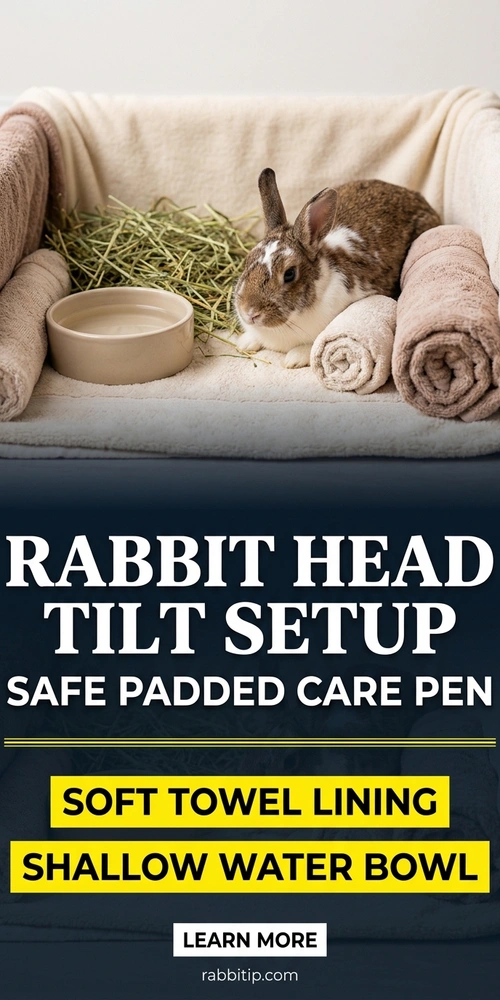
Use a low litter tray. You can also use a washable pad. Track stool size and wet spots. If stool turns watery, review rabbit diarrhoea treatment. Then contact your vet.
Handling, cleaning, and preventing injury
Handle your rabbit low over the padding. Support the chest and back end. Keep cleaning short and calm.
Avoid frequent lifting if rolling gets worse. Spot clean bedding instead. Stress can reduce eating. Calm care helps recovery.
Check the lower eye, ear, and shoulder. Sore spots can form there. Change bedding often to keep skin dry.
Medication routine and monitoring chart
Use a written chart for each medicine. Include dose, time, food, water, poop, and balance. Note each rolling spell.
A chart helps prevent double doses. It also helps your vet adjust care. Keep dated videos when signs change.
Use this simple log during recovery.
← Scroll to see more →
| Date/Time | Appetite | Water | Poop | Balance/Rolling | Meds Given | Call Vet? |
|---|---|---|---|---|---|---|
| Morning | Hay, pellets, greens | Bowl level | Number and size | Better, same, worse | Drug and dose | Yes or no |
| Afternoon | Hay, pellets, greens | Bowl level | Number and size | Better, same, worse | Drug and dose | Yes or no |
| Evening | Hay, pellets, greens | Bowl level | Number and size | Better, same, worse | Drug and dose | Yes or no |
What not to do at home
Do not put your rabbit on high furniture. Do not bathe a dizzy rabbit. Do not stretch the neck. Do not flush the ears. Do not try human vertigo moves.
Keep the pen quiet and dim if light bothers them. Keep bonded rabbits nearby only if they are gentle. A pushy bond mate can hurt a weak rabbit.
Recovery Timeline and Prognosis
Can a rabbit recover from a head tilt? Yes. Many rabbits improve with fast care and steady support. Some recover fully. Others keep a tilt and still live well.
First 24-72 hours: stabilization
The first goal is to stabilize your rabbit. It needs food, fluids, warmth, and safe housing. Medicine may not fix the balance right away.
Picture this. Your rabbit still tilts after one dose. That does not mean care failed. The first three days can be uneven.
Call your vet if eating drops. Call if rolling gets worse. Also, call if poop stops.
First weeks: balance, eating, medication response
In the first weeks, watch for small wins. More hay eating is a win. Sitting steadier is a win. Fewer rolls also matter.
The head angle may improve slowly. The Rabbit.org Foundation says recovery can take time. Support care may matter as much as medicine. Safe footing can help. Gentle movement may help if your vet agrees. Each cause heals at its own pace.
Long-term head tilt and quality of life
Some rabbits keep a lasting tilt. They can still eat and groom. They can still bond and enjoy life. Comfort and appetite matter most. Safe movement also matters.
Long-term care may need pen changes. Use low litter boxes. Use stable bowls. Use soft flooring. Tilted rabbits can learn a new normal.
Relapse warning signs
Relapse signs include new rolling. A worse tilt is also a warning. Eye flicking and appetite loss matter too. More hiding or fewer poops also matter.
Any sudden change needs a vet call. Keep your old notes. They help you spot changes fast.
Can a Rabbit Die From Head Tilt?
A rabbit can die from head tilt complications. It can also die from the illness behind it. The tilt itself is only a sign. The danger comes from dehydration and gut stasis. It can also come from trauma, severe infection, or nerve disease.
Death risk comes from the cause and complications
Will my rabbit die from head tilt? Not always. Many rabbits survive with fast care. Many also recover well.
Picture this. Your rabbit tilts but still eats well. That is less urgent than rolling and not eating. But it still needs vet care. Mild signs can get worse.
A bad ear infection can spread. It can also cause deep pain. EC can affect nerves and kidneys. Injury can worsen with swelling.
When fast care improves odds
Fast care improves the odds. It helps protect food and water intake. It also limits harm from rolling. It gives medicine a better chance to work.
Call a vet the same day for any new tilt. Call faster with trauma, eye flicking, or appetite loss. Treat those signs as urgent.
FAQ: Rabbit Head Tilt Treatment
Is a head tilt painful?
Head tilt can be painful. This is more likely with infection, injury, or pressure. It can also cause nausea, fear, and stress. Pain signs include tooth grinding and hiding. A hunched pose and poor appetite also matter.
Can a rabbit recover fully?
A rabbit can recover fully from a head tilt. Early care gives the best chance. Some rabbits keep a tilt. They can still have a good life. Recovery depends on the cause. It also depends on fast care and food support.
How do indoor rabbits get E. cuniculi?
Indoor rabbits can get E. cuniculi earlier in life. The parasite can pass through infected urine. It may stay quiet for months. Signs may appear later during stress or illness.
Should I try the Epley maneuver?
Do not try the Epley maneuver on a rabbit. It is a human vertigo method. It can hurt a scared or weak rabbit. Ask an exotic vet about safe support instead.
Act Fast, Support Gently, Keep Hope Realistic
Rabbit head tilt treatment needs fast exotic vet care. It also needs gentle home support. Eating, water intake, balance, and eye safety can change fast. Call a vet the same day for any new tilt. Call at once for rolling, appetite loss, trauma, or eye flicking. Then pad the pen. Track food and poop. Use the GI stasis, eye, diarrhoea, and breathing guides above while your rabbit gets proper care.
Check out this comprehensive guide on Rabbit Diseases & Emergency Care: The Complete Veterinary Guide. It dives into how various rabbit illnesses are related and highlights when you should seek urgent care.
