
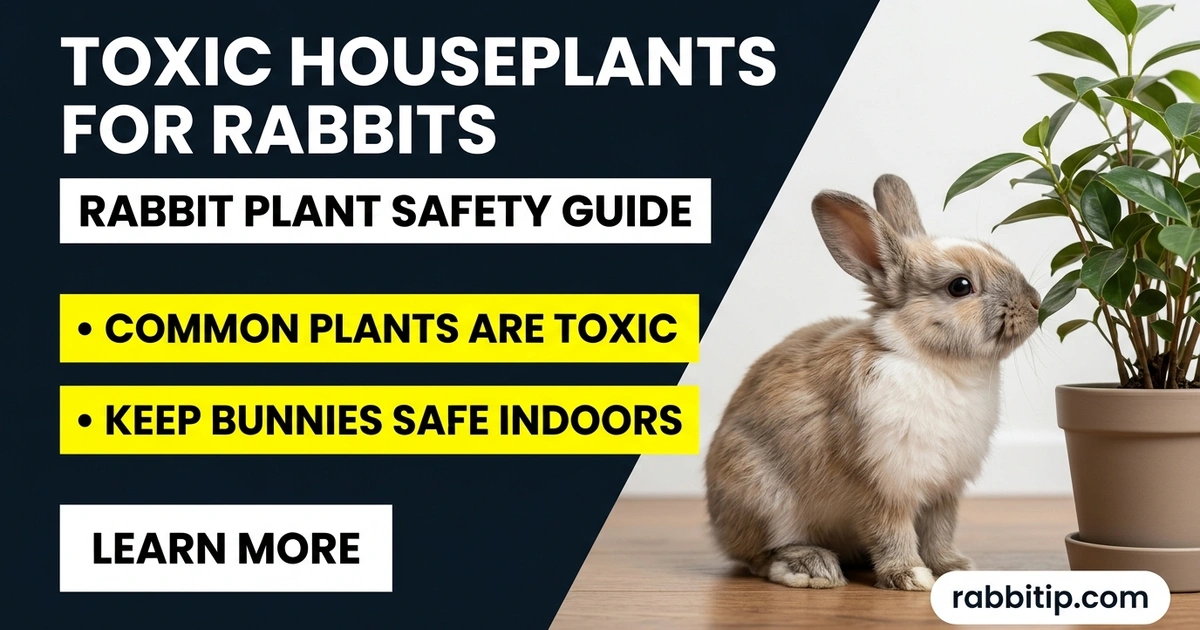
Your rabbit nudges a plant off the sill. It eats a leaf before you can stop it. Your stomach drops. You do not know if that plant is safe. This happens every day. The outcome depends on how fast you act and what you know.
Many toxic plants for rabbits are also popular houseplants and garden flowers. A single bite of yew, foxglove, or lily of the valley can be fatal. Rabbits are small. A toxic dose hits them much faster than most owners think.
This guide gives you a full A-Z list of plants that are harmful to rabbits. It covers where you are likely to find each one. You will also find symptom tips, a clear emergency plan, and a list of safe plants your rabbit can eat.
Why Rabbits Are Especially Vulnerable to Plant Toxins
Rabbits look tough. They are alert and active. But their bodies are at real risk from toxic plants. Even a tiny amount can cause harm. Knowing why helps you take this seriously.
The Myth That Rabbits Instinctively Avoid Toxic Plants
Many owners think their rabbit will not eat harmful plants. This is one of the most dangerous common rabbit myths in pet care. Wild rabbits learn to avoid some plants. They pass this skill through their group. Pet rabbits have no such learning. They grew up in safe, controlled spaces. They never learned what to avoid.
Your rabbit may eat a foxglove leaf just as happily as a piece of kale. The Rabbit Welfare Association and Fund confirms that pet rabbits cannot pick safe plants on their own. That job belongs to you.
How Rabbit Digestion Amplifies Toxicity
Rabbits cannot vomit. Once a toxin is swallowed, the body absorbs it. There is no way to push it back out. The Merck Veterinary Manual states this makes rabbits more at risk than cats or dogs. Those animals can sometimes purge a harmful substance before it is fully absorbed.
A rabbit’s small size also matters. A plant that only mildly affects a large animal can be lethal to a rabbit under two kilograms. Even a few bites of a toxic plant can cause organ failure or death.
Toxic Houseplants for Rabbits
Indoor rabbits face daily risk from common houseplants. Many popular plants can cause liver failure or severe oral pain in rabbits. If your rabbit roams your home freely, every plant it can reach is a potential danger.
The plants below are the most common and most harmful.
Dieffenbachia (Dumb Cane): Contains calcium oxalate crystals. Causes severe mouth pain, swelling, and trouble swallowing.
Philodendron: Also high in oxalates. Even a small amount causes gut upset and irritation.
Aloe Vera: The gel looks safe. But the layer under the skin contains harmful compounds. These cause diarrhea, tiredness, and organ stress.
Peace Lily: Causes mouth pain, heavy drooling, and in bad cases, tremors.
Pothos: Very common in UK and US homes. Toxic in any amount due to oxalate crystals.
Cyclamen: The whole plant is toxic. The tubers are worst. Linked to seizures and heart problems in small animals.
Amaryllis: Contains a toxin that causes vomiting, diarrhea, and low blood pressure. Bulbs are the most harmful part.
Picture your rabbit roaming the living room while you are in another room. It finds a low pothos leaf. It chews through the stem in under a minute. By the time you notice, it has eaten enough oxalates to cause serious mouth damage. This is not rare. It happens in normal homes every week.
The RSPCA says any plant with thick, glossy, or waxy leaves should be treated as unsafe until you confirm it is not. If you have a dog that could knock pots off shelves, the risk goes up further. For tips on shared spaces, see our guide on keeping rabbits and dogs together.
The PDSA says to remove all plants you cannot identify from rabbit areas right away. Do not leave a suspect plant in place while you search for answers.
Toxic Garden Plants and Flowers
Gardens are full of plants that can harm rabbits. Many flowers, shrubs, and food plants have toxic parts. A curious rabbit will explore without any caution. Outdoor runs and garden time both carry real risk if you have not checked your space.
Ornamental Flowers to Remove or Fence Off
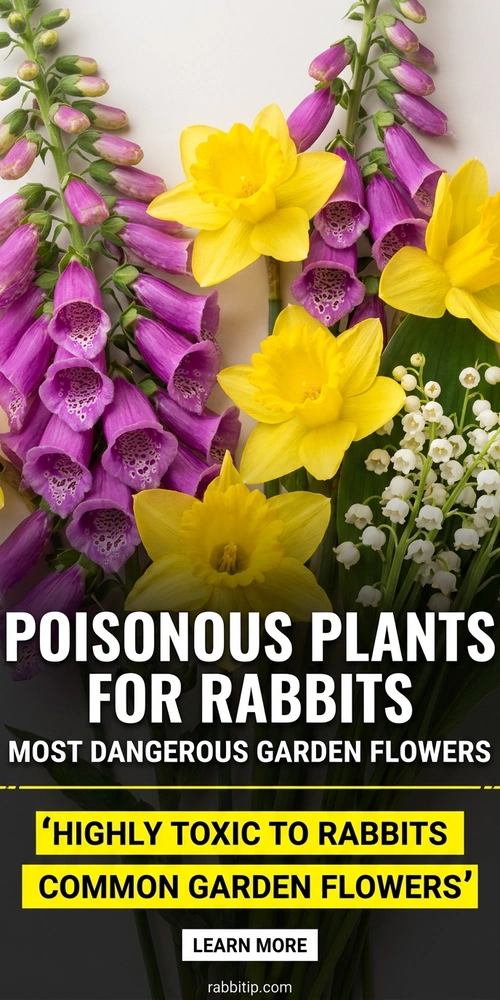
These flowers grow in millions of UK and US gardens. All of them are harmful to rabbits. Some are fatal in small amounts.
Azalea and Rhododendron: Disrupt nerves and muscles. Even a few leaves can cause drooling, weakness, seizures, and heart failure.
Daffodil: All parts are toxic. Bulbs are the most harmful. Spring is the riskiest time when rabbits graze on new growth.
Foxglove: Affects heart rhythm. A small amount can cause fatal heart problems in a rabbit.
Lily of the Valley: Also affects the heart. Just as dangerous as foxglove.
Oleander: All parts are extremely toxic. Even the water in a vase that held oleander can cause harm.
Tulip: Bulbs cause drooling, nausea, and low mood. Most risky in spring when bulbs are near the surface.
Hydrangea: Contains compounds that release cyanide during digestion.
Picture your rabbit in a garden run near a daffodil border in March. The ground is soft. The bulbs are just below the surface. Your rabbit digs through the corner of the run. In minutes, it reaches one of the most toxic garden plants in the country.
Common Shrubs, Hedges, and Vegetable Plants
What grows around your garden matters just as much. Many hedging plants and food plants have toxic parts a rabbit may reach.
Yew: One of the most deadly plants a rabbit can find. All parts except the red berry flesh are toxic. A few grams of yew leaves can kill a rabbit in hours.
Privet: Used widely for hedging. Causes vomiting, seizures, and low blood pressure.
Laurel: Cherry laurel leaves and berries release cyanide when chewed. Even small amounts are harmful.
Boxwood: All parts are toxic. Affects the nervous system.
Tomato leaves and stems: The green parts of tomato plants contain a toxic substance. The ripe fruit is safe, but the plant is not.
Potato plant leaves: Also contain the same toxin. Green potatoes and foliage must be kept away from rabbits.
Rhubarb leaves: Very high in oxalic acid. The leaves can cause kidney failure.
The PDSA says vegetable gardens are often overlooked as a risk. Many owners assume food plants are safe for their pets. But leaves, stems, and unripe parts of many vegetables can be very harmful.
Toxic Wild Plants Rabbits May Encounter While Foraging
Foraging feels natural for rabbits. Many owners pick fresh greens from fields with good intent. But wild areas hold some of the most toxic plants your rabbit can find. Know what to avoid before you pick anything.
These wild plants are found across the UK and US. They grow near paths, field edges, and waterways.
Hemlock (Water Hemlock and Poison Hemlock): Extremely toxic. Causes violent seizures and fast death. Water hemlock grows near streams. It looks like cow parsley, which can confuse foragers.
Ragwort: Common in fields and roadsides. Causes severe liver damage. Harm builds up over time with repeated small doses.
Deadly Nightshade: All parts are toxic. The berries are especially dangerous. Affects the nervous system.
Bryony (White and Black): Found in UK hedgerows. The bright berries look appealing. All parts are toxic.
Bindweed: Spreads across garden edges and fields. Contains compounds that cause gut problems.
Buttercup: Mild to moderate toxicity. Fresh buttercups cause mouth irritation and digestive upset.
Celandine (Greater Celandine): The orange sap is an irritant. Larger amounts can damage the liver.
Cowslip: Mildly toxic. Best avoided as a foraged plant.
Cornell University Veterinary warns that hemlock and ragwort are the biggest risks for rabbits in wild or rural areas. Both are widespread. Both can look like safe species. If you cannot name a plant with full certainty, do not give it to your rabbit.
Season matters here. Ragwort peaks in summer. Autumn crocus, which is very toxic, appears from late August through October. Daffodil and tulip bulbs are most exposed in early spring. Your awareness should shift with the seasons.
Complete A-Z List of Toxic Plants for Rabbits
The table below is your main reference. It covers 50 or more species drawn from the Rabbit Welfare Association and Fund, the ASPCA Animal Poison Control database, and vet records. Use it to check your home, garden, and any greens before your rabbit can access them.
Severity levels are as follows. Mild: causes short-term irritation or gut upset. Moderate: causes real distress and needs monitoring or a vet call. Severe: causes organ damage, nerve symptoms, or serious illness. Fatal: a small amount can cause death. Seek emergency vet care right away.
← Scroll to see more →
| Plant Name | Toxic Parts | Severity | Common Location |
|---|---|---|---|
| Agapanthus | All parts | Moderate | Garden |
| Aloe Vera | Latex layer, leaves | Moderate | House |
| Amaryllis | All parts, especially bulb | Severe | House / Garden |
| Anemone | All parts | Moderate | Garden / Wild |
| Autumn Crocus | All parts | Fatal | Garden / Wild |
| Azalea | All parts | Fatal | Garden |
| Bindweed | All parts | Moderate | Wild |
| Bindweed | Leaves, flowers | Moderate | Wild / Garden |
| Boxwood | All parts | Severe | Garden |
| Bryony (Black) | All parts, especially berries | Severe | Wild |
| Bryony (White) | All parts, especially berries | Severe | Wild |
| Buttercup | All parts (fresh) | Mild / Moderate | Wild / Garden |
| Caladium | All parts | Moderate | House |
| Celandine (Greater) | All parts, sap | Moderate / Severe | Wild |
| Cherry Laurel | Leaves, berries | Fatal | Garden |
| Clematis | All parts | Moderate | Garden |
| Columbine (Aquilegia) | All parts | Moderate | Garden |
| Cowslip | All parts | Mild | Wild |
| Cyclamen | All parts, especially tubers | Severe | House / Garden |
| Daffodil | All parts, especially bulb | Severe / Fatal | Garden / Wild |
| Deadly Nightshade | All parts, especially berries | Fatal | Wild |
| Delphinium | All parts | Severe | Garden |
| Dieffenbachia | All parts | Moderate / Severe | House |
| Elder (Elderberry) | Leaves, bark, unripe berries | Moderate | Wild / Garden |
| Euphorbia | Sap, all parts | Moderate | House / Garden |
| Fig | Sap, leaves | Mild / Moderate | House |
| Foxglove | All parts | Fatal | Garden / Wild |
| Geranium | All parts | Mild / Moderate | House / Garden |
| Hemlock (Poison) | All parts | Fatal | Wild |
| Hemlock (Water) | All parts | Fatal | Wild |
| Henbane | All parts | Fatal | Wild |
| Holly | Berries, leaves | Moderate / Severe | Garden / Wild |
| Hyacinth | All parts, especially bulb | Moderate / Severe | Garden / House |
| Hydrangea | All parts | Moderate / Severe | Garden |
| Iris | Rhizomes, leaves | Moderate | Garden |
| Ivy (Common) | All parts | Moderate | Garden / Wild |
| Jasmine | All parts | Moderate | Garden / House |
| Laburnum | All parts, especially seeds | Fatal | Garden |
| Lantana | All parts, especially berries | Severe | House / Garden |
| Lily of the Valley | All parts | Fatal | Garden |
| Lords and Ladies (Arum) | All parts | Severe | Wild |
| Lupin | Seeds, leaves | Moderate / Severe | Garden |
| Mistletoe | Berries, leaves | Severe | Wild / House (Christmas) |
| Monkshood (Aconite) | All parts | Fatal | Garden / Wild |
| Morning Glory | Seeds, all parts | Moderate | Garden |
| Narcissus | All parts, especially bulb | Severe / Fatal | Garden |
| Oleander | All parts | Fatal | House / Garden |
| Peace Lily | All parts | Moderate | House |
| Philodendron | All parts | Moderate | House |
| Poinsettia | Sap, leaves | Mild / Moderate | House |
| Poppy | All parts | Moderate / Severe | Garden / Wild |
| Potato (plant) | Leaves, stems, green tubers | Moderate / Severe | Garden |
| Pothos | All parts | Moderate | House |
| Primrose | All parts | Mild | Garden / House |
| Privet | All parts | Severe | Garden |
| Ragwort | All parts | Fatal (cumulative) | Wild |
| Rhododendron | All parts | Fatal | Garden |
| Rhubarb | Leaves | Severe / Fatal | Garden |
| Snowdrop | All parts, especially bulb | Moderate / Severe | Garden / Wild |
| Sweet Pea | Seeds, all parts | Moderate | Garden |
| Tomato (plant) | Leaves, stems | Moderate | Garden |
| Tulip | All parts, especially bulb | Moderate / Severe | Garden |
| Virginia Creeper | All parts | Moderate | Garden |
| Wisteria | Seeds, pods, all parts | Moderate / Severe | Garden |
| Yew | All parts (except berry flesh) | Fatal | Garden / Wild |
This table is a reference tool only. It is not a substitute for vet advice. If your rabbit has eaten any plant marked Severe or Fatal, call an emergency vet right away. Do not wait for symptoms to appear.
Symptoms of Plant Poisoning in Rabbits
Spotting poisoning early can save your rabbit’s life. Rabbits hide illness by instinct. When symptoms become clear, the situation may already be critical. Know what to watch for before a problem occurs.
Early Warning Signs
These signs can appear within minutes to a few hours after your rabbit eats a toxic plant. They are easy to miss or dismiss as minor.
Drooling or wet fur around the mouth: Often the first sign of mouth irritation from oxalate plants.
Loss of appetite: A rabbit that ignores hay or pellets is signaling something is wrong.
Lethargy or reluctance to move: Healthy rabbits are active. Sudden stillness is a red flag.
Soft, watery, or absent droppings: Gut changes happen fast when something is wrong inside.
Picture your rabbit sitting quietly in the corner. It ignores its hay. It barely moves. You might think it is just tired. But if its mouth also looks wet, these are early signs of poisoning. Act at the first sign. Do not wait for a second one.
Severe and Emergency Symptoms
These symptoms mean a medical emergency. Contact a vet right away if you see any of the following.
← Scroll to see more →
| Symptom | Severity | Action Required |
|---|---|---|
| Seizures or muscle tremors | Emergency | Call emergency vet now |
| Difficulty breathing or labored breathing | Emergency | Call emergency vet now |
| Collapse or inability to stand | Emergency | Call emergency vet now |
| Pale or blue-tinged gums | Emergency | Call emergency vet now |
| No fecal output for 12+ hours (GI stasis) | Urgent | Contact vet within the hour |
| Severe bloating or distended abdomen | Urgent | Contact vet within the hour |
| Extreme and uncontrolled drooling | Urgent | Contact vet within hours |
| Unresponsive or semi-conscious | Emergency | Call emergency vet now |
The Merck Veterinary Manual states that GI stasis can become fatal within 24 to 48 hours without treatment. Plant toxins can trigger it. Always treat GI stasis as urgent.
What to Do If Your Rabbit Eats a Toxic Plant
This section answers the most urgent question you may ever have as a rabbit owner. Rabbits cannot vomit. Every second between ingestion and treatment matters. Follow these steps in order.
Step 1: Remove access to the plant at once. Move your rabbit away from the plant. Secure the plant so no other pets can reach it.
Step 2: Identify the plant as best you can. Take a clear photo. Note the leaf shape, stem color, and any flowers or berries. Do not guess.
Step 3: Call an emergency vet right away. Do not wait for symptoms. Call your vet or an emergency animal hospital. Describe the plant and how much your rabbit may have eaten. The ASPCA Animal Poison Control Center runs a 24-hour helpline at (888) 426-4435 for US owners.
Step 4: Do not try to make your rabbit vomit. Rabbits cannot vomit. Trying to force this causes more harm. Do not give food, water, or any home remedy unless a vet tells you to.
Step 5: Bring a plant sample to the vet. Put a small cutting in a sealed bag. A clear ID helps the vet choose the right treatment, especially for plants with specific antidotes.
The RSPCA says the most common mistake owners make is waiting to see if symptoms appear before calling a vet. For plants marked Severe or Fatal in the A-Z table, symptoms may not show until toxin levels are already dangerous.
Safe Plants Your Rabbit Can Enjoy
Removing toxic plants should be followed by adding safe ones. Here is a list of plants confirmed safe for rabbits, as noted by the PDSA.
Basil: Full of flavor and safe in moderate amounts.
Cilantro (Coriander): Most rabbits enjoy this herb. Offer fresh leaves, not dried.
Dill: Safe and often popular with rabbits.
Mint: Offer in small amounts. Both peppermint and spearmint are safe.
Wheatgrass: Healthy and safe for daily access.
Rosemary: Safe in small amounts. The strong scent makes it good for enrichment.
Sunflower petals: Safe and often enjoyed as an occasional treat.
Dandelion greens: Very nutritious. One of the best wild plants to offer. Pick from areas free of pesticides.
You can also offer your rabbit safe things to chew through safe bunny chew toys. These satisfy foraging urges with no plant toxicity risk.
Always wash fresh plant material before offering it. Only pick wild plants from areas free of pesticides, weed killers, and road pollution.
Frequently Asked Questions
Do rabbits know which plants are poisonous?
Pet rabbits do not reliably know which plants are toxic. Wild rabbits learn some avoidance through their group. Pet rabbits have no such experience. Your rabbit may eat a very toxic plant without any hesitation. Plant safety is fully your responsibility as the owner.
What flowers are toxic to rabbits?
Many common garden flowers are toxic to rabbits. The most dangerous include foxglove, lily of the valley, daffodil, azalea, rhododendron, oleander, and tulip. All of these can cause severe harm or death in small amounts. Treat any flower you are unsure about as unsafe until confirmed otherwise.
What are the symptoms of plant poisoning in rabbits?
Early signs include drooling, loss of appetite, low energy, and changes in droppings. Severe signs include seizures, trouble breathing, collapse, and no droppings for 12 or more hours. If you see any severe sign, call an emergency vet right away. Do not wait for things to get worse.
What should I do if my rabbit eats a poisonous plant?
Move your rabbit away from the plant. Photograph the plant for ID. Call an emergency vet right away. Do not try to make your rabbit vomit. Bring a cutting of the plant to the vet in a sealed bag. Act fast, especially for plants rated Severe or Fatal in the A-Z table.
Are there houseplants safe for rabbits?
Yes. Several herbs and edible plants are safe in a rabbit-friendly home. Basil, cilantro, dill, mint, rosemary, and wheatgrass are all confirmed safe. Most ornamental houseplants should be kept fully out of reach until you verify them through a vet or welfare source.
Can a small bite of a toxic plant harm a rabbit?
Yes. Rabbits are small and cannot vomit. Even a tiny amount of a highly toxic plant can reach a harmful dose quickly. Plants like yew, foxglove, and lily of the valley have caused fatal outcomes after very short exposure. Never assume a small nibble is safe.
Audit Your Home and Garden Today. Your Rabbit Cannot Wait.
Every plant on this list sits in ordinary homes and gardens right now. The most toxic ones are also among the most popular. Yew is used for hedging across the UK. Foxglove grows wild along roadsides. Pothos sits on windowsills in millions of homes. Your rabbit cannot tell a safe plant from a deadly one.
Use the A-Z table as your audit tool. Go room by room. Check your garden borders, your outdoor run edges, and anything at ground level a curious rabbit could reach. Then bookmark this page and share it with other rabbit owners you know.
For further reading, visit our full guide to common rabbit myths to learn which beliefs about rabbit behavior put pets at real risk. And once your space is clear of hazards, explore our guide to safe bunny chew toys to replace toxic plants with enrichment your rabbit can enjoy safely.
